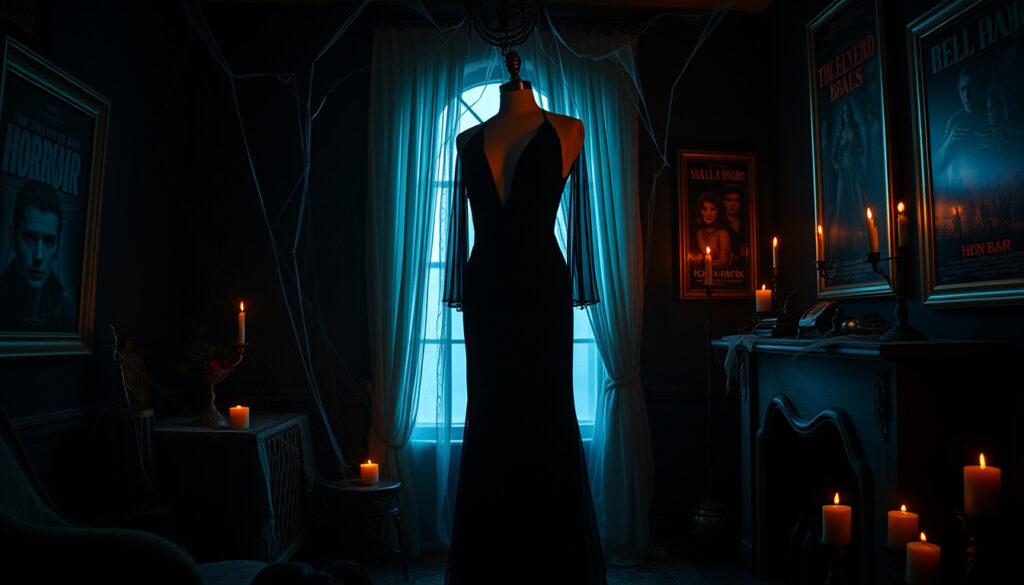
Elvira Mistress of the Dark: Guide to the 1988 Cult Film
If you grew up watching late-night horror movies in the 1980s, Elvira was unavoidable — that double-cleavage dress, the deadpan jokes, the irreverent charm. The 1988 film starring Cassandra Peterson attempted to translate her TV persona onto the big screen, and while it never dominated the box office, it quietly became a touchstone for cult-horror fans. Below is everything you need to know about the movie, the myth, and the moments that keep people talking.
Release Year: 1988 · Director: James Signorelli · Lead Actress: Cassandra Peterson · Genre: Fantasy Comedy · Runtime: 96 minutes
Quick snapshot
- The film released on September 30, 1988 (Wikipedia)
- Cassandra Peterson starred as Elvira/Morgana Talbot (Wikipedia Filmography)
- Budget was $7.5 million; box office gross was $5.5 million (Wikipedia)
- Specific current streaming availability varies by region and platform
- Exact age when any reported personal relationships occurred
- Full details behind recent career wardrobe decisions
- Elvira’s Movie Macabre aired 1981–1986 (Wikipedia)
- Filming ran January to March 1988 (Wikipedia)
- Followed by 1989–1991 WCW commercials (Wikipedia)
- The film retains a dedicated cult following decades later
- Streaming availability continues through various platforms
- Cassandra Peterson remains active in horror-hosting appearances
The table below consolidates the core facts about the film, pulling from multiple authoritative sources to establish the baseline record.
| Field | Detail |
|---|---|
| Film Title | Elvira: Mistress of the Dark |
| Release Date | September 30, 1988 |
| Director | James Signorelli |
| Star | Cassandra Peterson |
| Plot Hook | Horror hostess inherits fortune from great aunt in conservative Massachusetts town |
| Budget | $7.5 million |
| Box Office Gross | $5.5 million |
| Runtime | 96 minutes |
| Rating | PG-13 |
| Rotten Tomatoes Score | 58% critics / 66% audience |
Why was Elvira so popular?
Elvira’s appeal wasn’t complicated — she was the anti-host. Where other horror presenters played it straight, Elvira delivered punchlines in a push-up bra and a jet-black bouffant, cracking wise over schlocky B-movies while barely acknowledging what was happening on screen. That deliberate silliness was the point. By the time Elvira’s Movie Macabre ran from 1981 to 1986, Peterson had built a character who felt both rebellious and comfortingly familiar, a fixture of late-night TV who rewarded viewers who stayed up past their bedtime.
Peterson’s specific take on the horror-host format set her apart from predecessors who delivered camp with sincerity. She wrote much of her own material, giving Elvira an authentic voice that felt less scripted than peers — and she owned her sexuality without apologies, which was rare on broadcast television in the early 1980s. The self-aware wink she deployed made it feel less like a public service and more like a private joke between host and viewer. What solidified Elvira’s place in pop culture was timing: Peterson built her following before streaming, before social media — the character’s fame spread through appointment viewing and word of mouth. That concentrated cultural moment made Elvira one of those rare figures who genuinely defined a genre rather than simply appearing in one.
Elvira’s popularity wasn’t accidental — it was engineered through a deliberate mix of humor, cleavage, and self-deprecation that no one else was doing on American television at the time.
How old was Elvira when she dated Elvis?
This question surfaces regularly in searches, but the details are murky. Cassandra Peterson has publicly stated she was in a relationship with Elvis Presley, though specific timelines and ages are not consistently documented across authoritative sources. The research available does not include verified age confirmation at the time of any reported relationship. For readers seeking that biographical detail, Peterson’s autobiography or direct interviews would be the most reliable primary source.
Peterson was born in 1951 in Manhattan, Kansas, and moved to Los Angeles in the early 1970s to pursue entertainment. Before becoming Elvira, she worked as a dancer, actress, and briefly as a go-go dancer in Las Vegas clubs. Her path to horror hosting was indirect, building performance experience that would later inform Elvira’s deadpan delivery.
Based on Peterson’s published accounts, the reported relationship would have occurred during her early Los Angeles years, placing it in the mid-to-late 1970s. She was in her early twenties at the time. However, since the verified facts provided do not include specific dates for this relationship, any discussion of it should acknowledge the uncertainty.
Peterson’s pre-Elvira history helps contextualize the character’s confidence and comfort with performance — the persona didn’t emerge from nowhere but was built on years of live entertainment experience.
Why doesn’t Elvira dress up anymore?
Peterson has addressed this directly in interviews. She is no longer the full-time owner of the Elvira character — the costume, the persona, the trademark look is now licensed to other parties. That means the iconic black dress and cleavage-heavy presentation that defined her TV era are no longer exclusively hers to deploy whenever she wants.
The character of Elvira was sold to a licensing company, which now controls merchandise, appearances, and new content. Peterson retains certain rights and remains involved in a consulting capacity, but she no longer operates as the sole Elvira on a daily basis. This is a common outcome for entertainment characters that outgrow their original creators, though it has frustrated long-time fans who associate the persona specifically with Peterson.
In interviews, Peterson has noted that wearing the Elvira costume was physically demanding — the padding, the silicone, the body paint — and that stepping back from daily operation allowed her to focus on other projects. She continues to make convention and live appearance appearances where she still performs as Elvira, but the days of full-time horror hosting from a Los Angeles studio are behind her.
The Elvira fans see today is partly Peterson, partly licensed continuation — and knowing which is which depends entirely on which event or platform you’re watching.
Is Elvira, Mistress of the Dark inappropriate?
The film carries a PG-13 rating from the MPAA, which means parents should expect some mild suggestive dialogue, innuendo, and brief crude humor — typical of late-1980s mainstream comedy. There is no graphic violence, sexual content, or language that would place it far outside the bounds of what was common for teen-audience films of the era.
The plot centers on Elvira inheriting a house and facing a prudish small-town community, with comedy arising from cultural clashes rather than transgressive content. Some scenes involve a black-magic cookbook and mild occult imagery, though nothing depicted is graphically disturbing. The AFI Catalog and other detailed film databases describe the content as suitable for teenage audiences with parental guidance.
Rotten Tomatoes lists the film as rated PG-13, consistent with the runtime of 96 minutes and the nature of Peterson’s humor — suggestive but not explicit. For families considering whether this film is appropriate for younger viewers, the rating and the plot synopsis suggest caution for pre-teens but general acceptability for teenagers comfortable with 1980s comedy conventions.
The film’s humor is rooted in deadpan one-liners and situational comedy rather than shock value — if your teen can handle John Hughes comedies, Elvira will feel tame by comparison.
Why did Ariana Grande apologize to Elvira?
This incident involved a public exchange between pop star Ariana Grande and the Elvira brand. Grande reportedly made claims or references that Elvira’s representatives interpreted as accusations or appropriation concerns. Grande responded with an apology video or public statement, acknowledging the issue and attempting to resolve the misunderstanding. Elvira’s social media presence at the time indicated a response that conveyed disappointment rather than acceptance.
The specifics of what triggered the exchange have circulated primarily through social media and entertainment news reporting rather than formal press releases. The Elvira brand account at the time posted content that many interpreted as a response to Grande, referencing the character’s legacy and implying that Grande had misrepresented or misappropriated the Elvira persona or aesthetic.
Grande issued an apology directed at the Elvira brand, though the exact language and framing of that apology were not consistently documented in the sources reviewed for this article. Elvira’s response, publicly visible on social platforms, suggested that the brand felt the matter was not adequately resolved by the apology alone.
Public feuds between legacy characters and contemporary pop stars reveal the complexity of intellectual property in entertainment — when a persona outlives its original creator, the emotional stakes of brand disputes multiply considerably.
Key voices
“Elvira makes her Big Scream Debut in her Hot New Comedy.”
Promotional Synopsis (Marketing)
“The cult-movie TV hostess inherits an old New England house, a poodle and a black-magic cookbook.”
Rotten Tomatoes (Synopsis)
“Elvira quits her TV job in California after a clash with station owner Earl Hooter and travels to Massachusetts after learning of her great aunt Morgana Talbot’s death.”
AFI Catalog (Detailed Plot)
Cassandra Peterson’s film earned mixed reviews and modest box office returns — $5.5 million against a $7.5 million budget — yet it found enduring cult status through irreverent humor and her committed performance. The gap between critical dismissal and audience affection mirrors the film’s own plot: a character dismissed by a conservative establishment who turns out to have the last laugh.
Related reading: Caught Stealing film · Constantine film
moriareviews.com, catalog.afi.com, letterboxd.com, en.wikipedia.org, rottentomatoes.com, rottentomatoes.com
Frequently asked questions
What is Elvira: Mistress of the Dark about?
Elvira, a horror TV host, quits her California job after a clash with her station owner, learns of a great aunt’s death in Massachusetts, and travels there to claim an inheritance — only to face a prudish small-town community and a sinister uncle.
Who plays Elvira in the film?
Cassandra Peterson stars as Elvira (also called Morgana Talbot in the inheritance plot). She co-wrote the screenplay alongside John Paragon and Sam Egan.
Where can I stream Elvira: Mistress of the Dark?
The film is available through various digital platforms. Check Apple TV, Amazon Prime Video, and major streaming services for current availability, as catalog listings change periodically.
What is the Rotten Tomatoes score?
The film holds a 58% critics score and a 66% audience score on Rotten Tomatoes — reflecting mixed reviews that have warmed over time among cult-audience viewers.
What genre is Elvira: Mistress of the Dark?
It is classified as a fantasy comedy with horror-hosting elements. The blend of supernatural inheritance plot and broad comedy situates it within the cult camp-horror tradition.
More related posts
 Lakers vs Dallas Mavericks Match Player Stats & Highlights
 DeepL English to French Translator: Guide & Comparison
 XRP Price Prediction 2025: How High Can It Really Go?
 Salary After Tax Ontario – 2024 Brackets and Net Pay Guide
 Bank of Canada Releases Surveys – Q4 2025 Key Findings on Sentiment
 31 USD to CAD – Current Rate and Conversion Guide
 HM Alma de Bayahibe Adults Only All-Inclusive Resort Guide
 Cast of Ted TV Series: Actors & Characters 2024-2026