Pink Salt Trick for Weight Loss: Does It Really Work?
If you’ve spent any time on social media lately, you’ve probably seen the pink salt trick popping up in your feed — that rosy-tinted drink promised to rev up your metabolism and melt away pounds. The hashtag has racked up millions of views, with influencers swearing it curbed their cravings and shrunk their waists. But before you stock up on Himalayan salt, there’s something the wellness influencers aren’t quite telling you.
Scientific evidence for weight loss: None · Pink salt iodine content: Does not provide essential iodine · Common recipe additives: Lemon, honey, baking soda · Dietitian consensus: No weight loss benefits · Daily intake risks: Excess sodium possible
Quick snapshot
- Zero supporting research for weight loss (Ro’s evidence review)
- ~98% sodium chloride composition (BodySpec’s mineral analysis)
- Nutritionally similar to table salt (Mayo Clinic’s expert assessment)
- Long-term electrolyte effects in healthy adults
- Individual hydration responses vary
- Debloating claims lack controlled studies
- Trend goes viral on TikTok with millions of views (Noom’s trend analysis)
- PMC study on metabolic effects published in 2024 (Noom’s trend analysis)
- Major outlets publish debunking articles in 2025–2026 (Noom’s trend analysis)
- Research gaps may invite more supplement pitches
- Dietitians continue monitoring trend in 2026
- Focus shifts to evidence-based hydration instead
Here is how the key facts about pink salt stack up against the claims made on social media:
| Fact | Value | Source |
|---|---|---|
| Pink salt composition | ~98% sodium chloride with trace minerals | BodySpec’s mineral breakdown |
| Weight loss studies | Zero supporting research | Ro’s evidence summary |
| Typical serving | 1/16–1/8 tsp in 8–16 oz water | Ro’s recipe guide |
| Iodine provision | Insufficient for daily needs | Mayo Clinic’s nutrition expert |
Does the Pink Salt Trick Work for Weight Loss? Dietitians React
Registered dietitian Carla Hernandez put it bluntly when speaking to Prevention’s diet and wellness coverage: “There’s no scientific evidence that Himalayan pink salt promotes weight loss.” Her colleague described the trace minerals in pink salt as “sprinkles on a cupcake” — they add visual appeal but deliver negligible nutrition.
Kayla Reynolds, Director of Knowledge at Noom, confirmed what the research shows: “Sustainable weight loss is never about a single food or ‘miracle ingredient.’ Instead, it requires a holistic approach.” No TikTok drink can replace the fundamentals — balanced nutrition, regular exercise, adequate sleep, and stress management. For readers interested in evidence-based weight management, intermittent fasting for women represents a research-backed strategy worth exploring.
Mayo Clinic physician Dr. Regis Fernandes weighed in with an equally direct assessment: “Himalayan sea salt is basically the same thing as regular table salt.” The two are chemically nearly identical — the main difference is cosmetic, not nutritional. The pink color comes from trace iron and magnesium, not from some hidden fat-burning compound.
Expert opinions from dietitians
Dietitians interviewed by Noom’s nutrition team agree that while the drink may taste refreshing — especially with lemon — it provides no metabolic advantage. Any initial weight changes people experience come from water loss or increased hydration, not from burning fat.
Scientific evidence review
A 2024 study published in PMC’s peer-reviewed research found that a submaximal dose of pink salt over three weeks enhanced percentage food intake in subjects. But the study measured food consumption patterns, not weight loss — and actually suggested increased appetite as a potential effect. The Oregon State University Blogs team noted that trace minerals in Himalayan salt are present in quantities too small to produce any meaningful benefit; achieving meaningful mineral intake from pink salt alone would require sodium levels that are toxic.
The one PMC study on pink salt’s metabolic effects measured appetite stimulation, not fat loss. For anyone using the pink salt trick hoping to suppress hunger, the research points in the opposite direction.
How do you take Himalayan salt for weight loss?
For those determined to try the recipe, most sources agree on a basic preparation: dissolve 1/16 to 1/8 teaspoon of pink Himalayan salt in 8–16 ounces of warm water, according to Ro’s recipe breakdown. Some variations add a squeeze of lemon or a drizzle of honey for taste. The “Sole” version — a saturated salt solution — uses 1 teaspoon of salt in 8 ounces of water and is traditionally consumed first thing in the morning on an empty stomach, per Oregon State University’s wellness analysis.
Basic preparation steps
- Dissolve pink Himalayan salt (1/16–1/8 tsp) in 8–16 oz warm or room-temperature water
- Stir until fully dissolved — larger crystals may take longer
- Consume in the morning on an empty stomach, or before meals
- Maximum recommended pinch: 1/16 teaspoon to avoid excess sodium
Variations with lemon or honey
Recipe variations circulating on social media add ingredients like fresh lemon juice or raw honey. According to BodySpec’s recipe review, the four-ingredient versions sometimes include baking soda, marketed as a “natural Mounjaro alternative.” The Prevention article notes that lemon juice may modestly speed gastric emptying compared to plain water — a minor digestive effect, not a weight-loss mechanism.
What are the ingredients in the pink salt trick?
The standard pink salt trick recipe calls for just two core ingredients: pink Himalayan salt and water. Optional additions include lemon juice, honey, or baking soda. The salt itself is mined primarily in Pakistan and is approximately 98% sodium chloride with trace minerals including iron, magnesium, potassium, and calcium that give it its characteristic pink hue, according to Noom’s ingredient guide.
3-ingredient recipes
- Classic: 1/16–1/8 tsp pink Himalayan salt + 8–12 oz water
- Lemon twist: same base + 1–2 tbsp fresh lemon juice
- Honey variation: same base + 1 tsp raw honey
4-ingredient versions with baking soda
Four-ingredient recipes circulating online add baking soda to the mix, sometimes promoted as a “natural Mounjaro recipe.” Oregon State University’s science team notes that while baking soda is safe in small amounts, it offers no demonstrated weight-loss benefit either. These extended recipes are not supported by any clinical evidence.
What happens if I drink pink salt water every day?
Dr. Childress, speaking to Ro’s medical consultation, warned plainly: “Too much sodium can lead to water retention, which may actually lead to weight gain — however, this would be fluid gain, not fat gain.” The recommended daily sodium limit is about 1 teaspoon of salt total, and most people already exceed that through their regular diet. Individuals monitoring their cardiovascular health should note that excess sodium poses particular risks — those with blood pressure concerns may benefit from reviewing BPC 157 side effects alongside any sodium intake adjustments.
Potential benefits claimed
Social media testimonials claim benefits ranging from reduced bloating to improved energy and faster metabolism. The only benefit with any partial scientific backing is improved hydration — adding a small amount of salt to water can enhance fluid absorption — but plain water accomplishes the same thing without the sodium risk, per Ro’s nutrition analysis.
Risks and side effects
- Water retention and bloating from excess sodium
- Risk for individuals with high blood pressure or kidney disease
- May increase appetite, not suppress it, based on PMC research
- No iodine provision — unlike iodized table salt
- Trace minerals too small to meet daily nutritional needs
The pink salt trick provides no iodine, an essential nutrient that iodized table salt deliberately supplies. Relying on pink salt exclusively could contribute to iodine deficiency over time — a particular concern for thyroid health.
Does the salt water trick really work?
In one word: no. The Oregon State University research team was direct: “Using Himalayan salt recipes does not result in direct fat loss; changes are due to fluid regulation and mineral balance.” Any scale movement after starting the pink salt trick comes from water, not from burning adipose tissue.
Debloat claims examined
Some proponents claim the drink reduces bloating by improving mineral balance and hydration. While proper hydration can indeed reduce temporary bloating, the mechanism has nothing to do with pink salt specifically — any mineral water or electrolyte drink would work the same way, without the social-media mythology attached.
Weight loss reality check
The Prevention’s health team quoted registered dietitian Carla Hernandez with a verdict that sums up the scientific consensus: no clear evidence supports the idea that pink salt in morning water promotes weight loss. The only path to sustainable weight loss remains a calorie deficit combined with balanced nutrition, regular exercise, adequate sleep, and stress management.
The pink salt trick might nudge some people toward drinking more water — a minor health positive. But framing it as a weight-loss tool sets false expectations that ultimately set dieters up for disappointment and distraction from what actually works.
Upsides
- May encourage increased water intake
- Pink salt contains no anti-caking agents found in some table salts
- Flavor variation may help some people drink more fluids
- Trace minerals are natural (though negligible in quantity)
Downsides
- Zero scientific evidence for weight loss
- May increase appetite rather than suppress it
- No iodine unlike iodized table salt
- Risk of excess sodium intake
- Sets false expectations and distracts from proven methods
- Higher cost than regular table salt
How to make the pink salt trick safely
For those who still want to try the recipe as a hydration option, keep the sodium dose minimal and understand what the drink can and cannot do. According to Ro’s safety guidelines, the absolute maximum pinch should not exceed 1/16 teaspoon — roughly the amount that fits on a fingertip.
- Measure no more than 1/16 teaspoon of pink Himalayan salt
- Dissolve completely in 8–12 ounces of room-temperature water
- Add lemon or honey only if desired for taste — not for weight loss
- Consume no more than once daily, preferably not on an empty stomach
- Do not use as a meal replacement or appetite suppressant
- Track your total daily sodium from all food sources
Even if you follow the recipe to the letter, the pink salt trick won’t burn fat or speed metabolism. The only people who might see marginal benefit are those who genuinely struggle to drink enough plain water — and for them, a squeeze of lemon in plain water would accomplish the same thing for far less money and sodium.
The pattern is consistent across sources: the pink salt trick gains traction as a social media trend, generates millions of views, and then health professionals publish their verdicts. The verdict is uniform — no weight loss, no metabolism boost, no fat burning. What’s left is a marginally flavored glass of salty water that costs significantly more than the table salt in your pantry.
““Sustainable weight loss is never about a single food or ‘miracle ingredient.’ Instead, it requires a holistic approach.””
““They’re like sprinkles on a cupcake: They add color, but not enough nutrition to matter.””
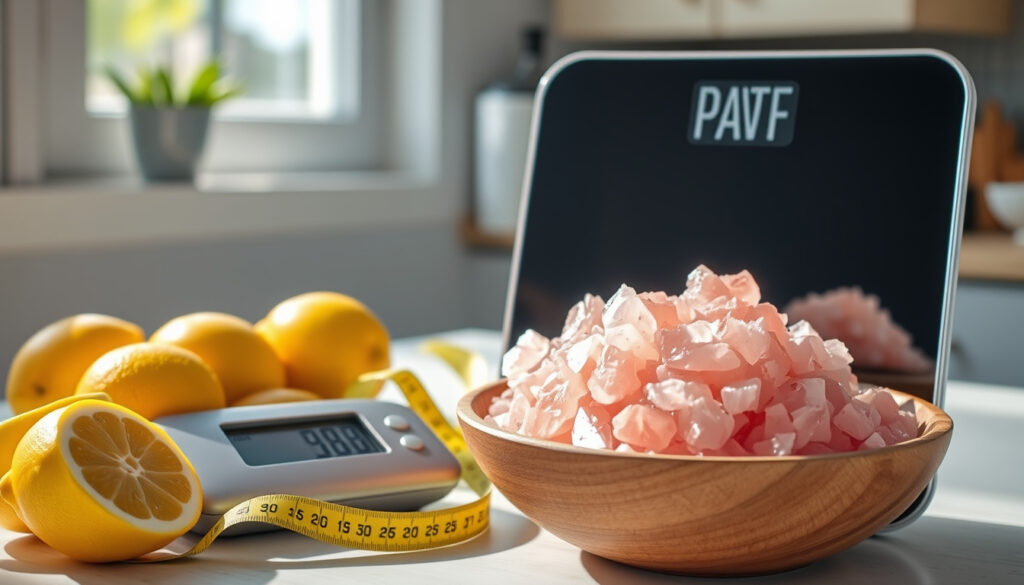
Viral hype surrounds the Pink Salt Trick recipe promising effortless fat melt, but dietitians reviewing similar recipes find zero scientific evidence.
Frequently asked questions
What is pink salt?
Pink salt refers to Himalayan pink salt, a rock salt mined primarily in Pakistan. It gets its distinctive pink color from trace iron and magnesium minerals. Chemically, it is approximately 98% sodium chloride — essentially the same compound as table salt.
Is pink Himalayan salt better than table salt?
Not in any meaningful nutritional sense. Mayo Clinic physician Dr. Regis Fernandes stated plainly that Himalayan sea salt is basically the same thing as regular table salt. Both are approximately 97–99% sodium chloride. Pink salt lacks the iodine that iodized table salt provides, and the trace minerals are present in quantities too small to impact health positively.
Can pink salt help with hydration?
Adding a small amount of salt to water can enhance fluid absorption in the gut — a well-established principle behind oral rehydration solutions. However, the same effect is achieved with plain water, and plain water avoids the risk of excess sodium. For most people, adequate hydration is best supported by drinking water throughout the day.
What are risks of daily pink salt water?
Daily consumption risks include excess sodium intake, which can cause water retention and raise blood pressure. The recommended daily sodium limit is approximately 1 teaspoon of salt total, and most people already consume more than this. Individuals with hypertension, kidney disease, or heart conditions should avoid adding extra salt to their diet.
Does pink salt contain iodine?
No. Pink Himalayan salt does not contain the iodine that iodized table salt deliberately provides. Iodine is essential for thyroid function, and relying on pink salt as your primary sodium source could contribute to iodine deficiency over time.
Are pink salt trick pills legitimate?
Supplements marketed as “pink salt trick pills” or similar products make the same unsupported claims as the drink version. There is no clinical evidence that any pink salt preparation promotes weight loss. Consumers should be especially cautious of products that require a purchase — the trend itself costs only a few dollars at most grocery stores.
Where can I buy pink Himalayan salt?
Pink Himalayan salt is widely available at health food stores, most grocery stores, and online retailers. It typically costs $3–8 for a small bag, significantly more than an equivalent amount of table salt. If you’re buying it for the aesthetic in a salt grinder, that’s a reasonable choice — if you’re buying it expecting weight loss benefits, save your money.
More related posts
 Houses for Sale in Niagara Falls ON – 694+ Listings
 Elvira Mistress of the Dark: Guide to the 1988 Cult Film
 1 Euro to CAD: Live Rate 1.60, Converter & Forecast
 The Life of a Showgirl Lyrics: Taylor Swift Full Song Text
 Love Island USA Season 7 Cast – Originals, Bombshells, Winners
 1 Canadian Dollars in Rupees – Live Exchange Rate and Trends
 Magalie Lépine-Blondeau Conjoint – Verified Facts and Updates
 Dominican Republic Nightclub Roof Collapse: Jet Set Facts