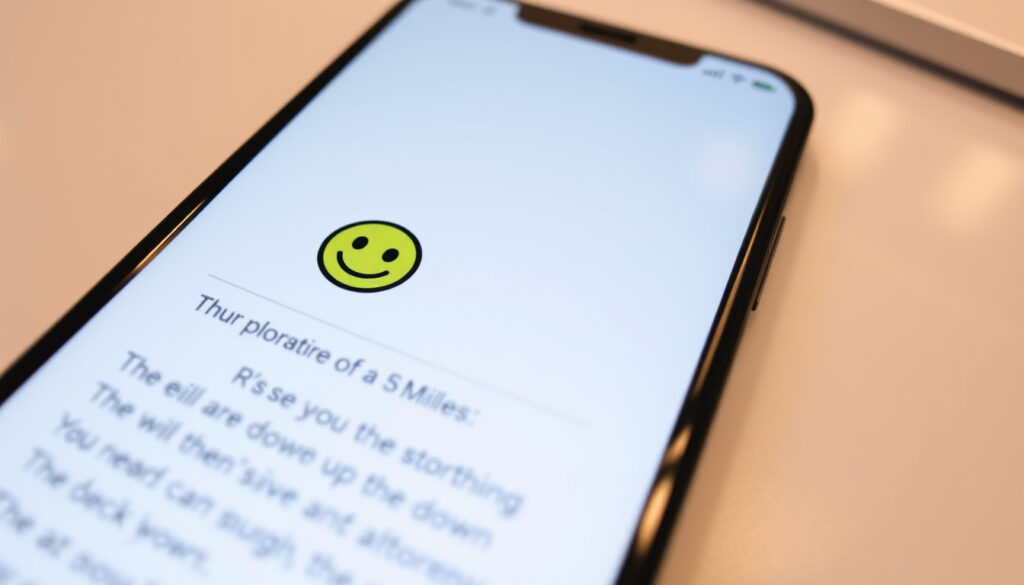
🙃 Upside Down Smiley Emoji Meaning: Real Usage Guide
You’ve probably received a text that ended with 🙃 and wondered: is this person being sarcastic, flirty, or just plain silly? The upside-down smiley is one of the most versatile emoji in the modern keyboard — and one of the easiest to misinterpret. This guide unpacks its real meanings, how to read tone, and what platforms and context reveal about the sender’s intent.
Official Unicode Name: Upside-Down Face · Unicode Version: 11.0 (2018) · Common Nickname: Upside-down smiley · Platform Support: iOS, Android, Windows, macOS, Web · Top Interpretation: Sarcasm / irony · Inverse Of: 🙂 Slightly Smiling Face
Quick snapshot
- Most common interpretation (Emojipedia)
- Signals the opposite of the literal text (Emojipedia)
- Used to mock or tease lightly (Emojipedia)
- Conveys a goofy, joking tone (Dictionary.com)
- Often replies to absurd statements (Dictionary.com)
- Can be self-deprecating (Dictionary.com)
- Used to show interest in a playful way (YouTube explainer)
- Common in early-stage romantic conversations (YouTube explainer)
- Accompanied by teasing language (YouTube explainer)
- Indicates annoyance without direct anger (Dictionary.com)
- Flipped smiley masks frustration (Dictionary.com)
- May be misinterpreted as positive (Dictionary.com)
Six factors shape the meaning of the 🙃 emoji at first glance.
| Attribute | Value |
|---|---|
| Official Name | Upside-Down Face (Emojipedia) |
| Unicode Codepoint | U+1F643 (Emojipedia) |
| Introduced | Unicode 11.0 (2018) (Emojipedia) |
| Emoji Version | 11.0 (Emojipedia) |
| Category | Smileys & Emotion (Emojipedia) |
| Platform Flipped Version Of | 🙂 Slightly Smiling Face (Emojipedia) |
What Does 🙃 Mean When Texting?
Common interpretations: sarcasm, silliness, irony
- 🙃 is the most common way to signal that your words should not be taken at face value. Emojipedia calls it “a classic smiley, turned upside down” and notes it is “commonly used to convey irony, sarcasm, or playful cynicism.”
- Dictionary.com adds that it can also express “sarcasm, passive aggression, irony, silliness, or frustrated resignation.”
- A YouTube explainer lists irony, sarcasm, humor, embarrassment, flirting, and frustration as possible meanings.
Context matters: tone and relationship
The same 🙃 can read as playful teasing between friends or as a passive-aggressive jab in a tense exchange. Dictionary.com emphasizes that the emoji “can communicate confusion or irony and may substitute for tone markers such as /s and jk.” The relationship with the sender — close friend, colleague, crush — changes how the flip lands.
Cultural differences in usage
Available sources do not provide cross-cultural data, but Emojipedia notes that platform designs vary: Microsoft’s version reportedly once featured a full-toothed grin, which could alter the perceived tone. Because the emoji lacks a fixed meaning, cultural and platform nuances multiply the ambiguity.
Senders who use 🙃 rely on the reader to decode irony or playfulness — a gamble that works best in relationships with shared context.
What Is the Difference Between 🙂 and 🙃?
The semantic gap between these two smileys is wider than a 180-degree rotation. Here are the main contrasts:
| Attribute | 🙂 Slightly Smiling Face | 🙃 Upside-Down Face |
|---|---|---|
| Visual | Right-side up, eyes forward | Flipped 180°, eyes inverted |
| Primary tone | Genuine politeness or mild happiness | Irony, sarcasm, playfulness |
| Implied sincerity | High — a standard polite smile | Low — often signals the opposite of the literal text |
| Relationship to text | Agrees with or reinforces the message | Contradicts or undercuts the message |
| Risk of misinterpretation | Low | High — can read as flirty or passive-aggressive |
The pattern: 🙃 is the visual and semantic opposite of 🙂. As Emojipedia explains, 🙃 is implemented as a flipped version of 🙂 on most platforms.
Semantic shift from genuine to ironic
🙂 signals “I’m content.” 🙃 says “I’m anything but.” The inversion mirrors the rhetorical device of irony — saying one thing while meaning another. Dictionary.com describes the emoji as a way to convey a “hidden meaning” or signal that a statement is not to be taken seriously.
When to use each
Use 🙂 for a warm sign-off or polite acknowledgment. Use 🙃 when you want to add a layer of playfulness, sarcasm, or self-aware frustration. A commentator on Lecky Bang argues that “sarcasm is the most sensible use of the emoji but not its only use” — a reminder that context rules.
Choosing between 🙂 and 🙃 changes the entire tone of a message. A misplaced flip can turn a friendly note into a confusing or even hurtful exchange.
Why Do Girls Use 🙃?
Flirting and playful teasing
There is no quantitative evidence on gender differences, but qualitative sources suggest that women may use 🙃 to flirt or appear playful. A YouTube explainer lists flirting as a possible but relatively rare use — and notes it often appears alongside other emoji such as a blushing face. Dictionary.com includes flirtation only indirectly, saying the emoji can be used “flirtatiously when paired with other emoji.”
Expressing sarcasm without confrontation
🙃 allows the sender to express a critical or mocking thought while keeping the surface appearance of a smile. This can soften a sarcastic remark and make it feel less aggressive — a strategy that appears across genders but may be especially useful in relationships where direct confrontation is avoided.
Subverting expectations
The flipped face is itself a visual subversion of the smiley norm. Using it can signal that the sender is knowingly breaking conversational rules — a trait associated with playfulness and emotional intelligence. Available sources do not confirm any gender-specific pattern beyond anecdotal reports.
Without solid survey data, claims about gender-specific usage remain anecdotal. Readers should be wary of broad generalizations.
Is 🙃 Flirty?
Flirty vs. friendly context clues
- 🙃 can be flirty when used in a lighthearted, teasing context — especially in one-on-one messages between people who share romantic interest.
- The same emoji in a group chat or with a colleague is more likely to read as sarcasm or silliness. Dictionary.com calls it “a way to convey a hidden meaning” — and that hidden meaning may be flirtatious or ironic depending on who is reading.
Age and relationship dynamics
Younger users tend to assign more emotional nuance to emoji. A YouTube explainer suggests that 🙃 can indicate embarrassment or frustration with a positive twist — emotions that overlap with the awkwardness of early flirting. In relationships where both parties already use playful emoji, 🙃 is more likely to be read as flirtatious.
Overlap with playful sarcasm
The line between flirty and sarcastic 🙃 is thin. Both rely on the same mechanism: saying something that is not literally true. The difference lies in the surrounding messages and the relationship history. Emojipedia compares the intended tone to the bemused “Oh well!” of a shrugging gesture — not inherently romantic.
If the sender uses 🙃 with a blushing or heart emoji, flirty intent is far more likely. Alone, it is a toss-up between irony and interest.
What Does the Upside Down Smiley Emoji Mean From a Guy or Girl?
From a guy: potential sarcasm or joking
Anecdotal observations suggest that guys tend to use 🙃 for sarcasm or joking — similar to the general trend. A commentator on Lecky Bang notes that the emoji is “overused for sarcasm,” which aligns with the view that male usage often aims at humor rather than flirtation.
From a girl: often playful or flirty
When women use 🙃, the tone is more frequently interpreted as playful or flirtatious — but this may reflect social expectations as much as actual intent. The YouTube explainer includes flirting as a possible meaning, and Dictionary.com mentions it can be used “flirtatiously when paired with other emoji.”
Age group variations
No hard data exists on age splits, but the emoji was introduced in 2015 (Unicode 8.0) and gained mainstream use around 2018. Younger digital natives are more comfortable with its ironic overtones, while older users may read it as literal confusion or a typo. The implication: for anyone born after 2000, 🙃 is a tone marker; for those older, it may still look like a mistake.
Confirmed facts
- 🙃 is used for irony and sarcasm (Emojipedia)
- It is the visual inverse of 🙂 (Emojipedia)
- It was added in 2015 with Unicode 8.0 (Dictionary.com)
- It can signal passive aggression, silliness, or frustration (Dictionary.com)
- Flirtation is possible but relatively rare (YouTube)
What’s unclear
- Whether the sender intends flirtation or friendly sarcasm — only surrounding context can hint
- Consistency of meaning across different cultural groups — no cross-cultural studies exist
- Gendered usage patterns — the available sources provide no quantitative evidence (Dictionary.com)
- Platform-by-platform user behavior data — only design notes are available (Emojipedia)
What the experts say
A classic smiley, turned upside down. Implemented as a flipped version of 🙂 Slightly Smiling Face on most platforms. Commonly used to convey irony, sarcasm, or playful cynicism.
Emojipedia
The upside-down face emoji can convey sarcasm, passive aggression, irony, silliness, or frustrated resignation. It can communicate confusion or irony and may substitute for tone markers such as /s and jk.
Dictionary.com
For anyone picking up their phone to send a 🙃, the key takeaway is that this emoji does not speak for itself — its meaning depends entirely on the relationship, the surrounding messages, and the platform that renders it. The flip is a signal to the reader to look beyond the literal. For texters who want to avoid misinterpretation, the safest strategy is to pair the emoji with clear context or a second emoji that anchors the tone. For those who enjoy the ambiguity, the upside-down smiley remains one of the few emoji that can say the opposite of what it looks like — and that is its enduring power.
Frequently asked questions
What does 🙃 mean on Snapchat?
On Snapchat, 🙃 carries the same range of meanings — sarcasm, playfulness, flirtation, or irony — but the ephemeral nature of the platform can increase ambiguity. With no permanent text log, context relies even more on the current conversation.
Can I use 🙃 in a professional email?
Generally no. 🙃 is an informal tone marker; in a work email it may appear unprofessional, passive-aggressive, or confusing. Stick to clear language in business correspondence.
Does 🙃 have a sexual meaning?
Not inherently. While some users may employ it in a flirty or suggestive context, the emoji itself does not carry a fixed sexual meaning. Any erotic reading depends entirely on the surrounding conversation.
How do I type the upside-down face emoji on my phone?
On iOS and Android, open the emoji keyboard, navigate to the Smileys category, and look for the face with eyes on top and mouth on bottom. You can also search for “upside down face” in the emoji search bar.
Is 🙃 the same as 🙃 in other fonts?
Yes, the Unicode codepoint is U+1F643 regardless of font. However, platform-specific designs vary — Microsoft’s older version, for example, reportedly had a full-toothed grin, which changed the perceived tone.
What is the difference between 🙃 and 😜?
😜 (winking face with tongue) explicitly signals joking or teasing. 🙃 is more ambiguous — it can be sarcastic, playful, or passive-aggressive. 😜 is almost always lighthearted; 🙃 can carry an edge.
Should I use 🙃 to end a text?
Only if you want the recipient to question your tone. It works well with close friends who know your humor, but with acquaintances or in serious conversations it risks confusion. Use sparingly.
More related posts
 Air India Vancouver to Delhi Flights: Duration & Prices
 The One Gallery Resort – Reviews, Rates and 2025 Guide
 Deontay Wilder: Record, Lawsuit & Next Fight 2025
 Rajasthan Royals vs KKR Match Scorecard – IPL 2026
 Zelina Vega: Biography, Husband, Height, and WWE Career
 Bank of Canada Releases Surveys – Q4 2025 Key Findings on Sentiment
 Caught Stealing (Film): Good or Flop? Cast & Where to Watch
 How Long Are You Contagious With a Cold – Day-by-Day Timeline