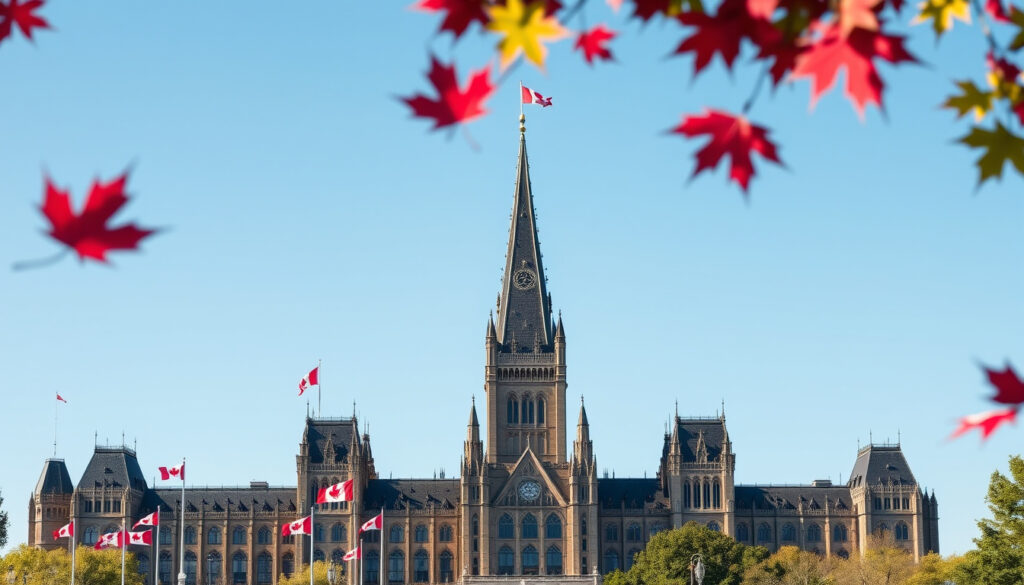
News on Canadian Election – Carney’s Liberals Win Minority Government
The 2025 Canadian federal election concluded on April 28, delivering a minority government victory for the Liberal Party under Prime Minister Mark Carney. The result defied pre-election polling that had consistently favored Pierre Poilievre’s Conservatives throughout much of the campaign cycle. Carney, a political newcomer who assumed Liberal leadership in March 2025, successfully mobilized voter support amid heightened trade tensions with the United States.
This snap election followed Justin Trudeau’s resignation in January 2025 after years of declining approval ratings. The campaign period, though brief, centered on kitchen-table economic concerns and Canada’s response to U.S. tariff threats under President Donald Trump. Nearly 28 million eligible voters participated, with turnout reaching 69.5 percent—the highest recorded since 1993.
When Is the Next Canadian Federal Election?
The 2025 Canadian federal election took place on April 28, 2025, following a snap election call by newly elected Liberal Leader Mark Carney. Originally, Parliament had been prorogued until March 24, 2025, but Carney advised Governor General Mary Simon to dissolve Parliament on March 23, accelerating the timeline significantly. This marked a departure from the expected October 2025 date that many analysts had anticipated based on standard electoral timing.
April 28, 2025
Liberals (Carney)
Carney vs. Poilievre
172 of 343
The election utilized a newly adjusted electoral map featuring 343 seats, redistricted based on the 2021 census data. This represented an increase from the previous 338-seat distribution, reflecting population growth across Canadian provinces.
- Turnout reached 69.5% among 28 million eligible voters—highest since 1993
- Liberals won the popular vote for the first time since 2015
- Conservatives gained seats but finished second despite leading in pre-election polls
- NDP lost official party status with only 7 seats
- Over 85% of votes concentrated between the two major parties
- Carney became Prime Minister despite never previously holding elected office
| Fact | Details |
|---|---|
| Election Date | April 28, 2025 |
| Prime Minister | Mark Carney (Liberal) |
| Opposition Leader | Pierre Poilievre (Conservative) |
| Total Seats | 343 |
| Government Type | Minority |
| Voter Turnout | 69.5% |
| Eligible Voters | Approximately 28 million |
| Previous Election | September 2021 |
What Are the Latest Polls and Predictions?
Pre-election polling told a dramatically different story than the eventual outcome. From mid-2023 through January 2025, surveys consistently projected a Conservative landslide, with Poilievre’s party holding leads ranging from 8 to 15 percentage points over the Liberals. This sustained lead represented one of the most significant polling advantages for the opposition in recent Canadian political history.
Poll Trends Leading to the Election
The polling landscape shifted abruptly following Mark Carney’s entry into the Liberal leadership race in late February 2025. His central banking credentials—former Governor of both the Bank of Canada and Bank of England—resonated with voters concerned about economic stability amid U.S. tariff threats. The Liberals staged what many analysts described as a record-breaking polling rebound.
Final results showed the Liberals winning the popular vote with their highest share since 1980, marking the first time since 2015 that the party secured more votes than the Conservatives. The reversal was particularly striking given that polls had showed Conservative leads throughout most of the preceding two years.
Seat Projections and Final Results
The Conservatives did gain seats compared to their 2021 performance, but not enough to claim government. The Liberals emerged as the largest party in a minority parliament, requiring cooperation from other parties to maintain confidence in the House of Commons. The New Democratic Party suffered the most significant decline, dropping to just 7 seats and losing official party status—a historic low for the party that had formed the Official Opposition as recently as 2011.
Over 85 percent of votes went to the Liberal and Conservative parties, representing the most concentrated two-party vote share since 1958. This trend signaled a significant shift toward political polarization and away from the multiparty dynamics that had characterized Canadian politics in recent decades.
Who Are the Main Party Leaders?
The 2025 election featured a completely transformed leadership landscape compared to the previous Parliament. Justin Trudeau, who had led the Liberal Party since 2013 and served three terms as Prime Minister, announced his resignation in January 2025. His departure came amid sustained polling declines and mounting pressure from within his own caucus following a series of difficult by-election results.
Mark Carney — Liberal Party
Mark Carney assumed the Liberal leadership in March 2025 after running unopposed following Chrystia Freeland’s withdrawal from the race. Carney announced his candidacy in Nepean on March 22 and quickly became the focal point of the Liberal campaign. His expertise in navigating economic crises—he led Canada’s central bank during the 2008 financial meltdown and later the Bank of England during Brexit—positioned him as a candidate best equipped to handle trade disruptions. Carney had never previously held elected office.
Pierre Poilievre — Conservative Party
Pierre Poilievre had served as Conservative leader since September 2022, ascending to the position after the party’s previous leader, Erin O’Toole, was removed in February of that year. Poilievre’s leadership brought a more populist and combative approach to Conservative politics, emphasizing criticism of Trudeau and what he termed “gatekeepers” blocking ordinary Canadians from economic opportunity. His campaign focused heavily on cost-of-living concerns, housing affordability, and government accountability.
Other Party Leaders
Jagmeet Singh led the New Democratic Party into the election but faced significant challenges as his party recorded historic lows. The NDP had previously profited from its 2022 confidence-and-supply agreement with the Liberals, which had propped up the minority government in exchange for policy concessions. That agreement ended in September 2024, leaving the NDP to face voters without the benefit of governing-party association.
What Are the Key Issues?
The 2025 campaign centered on economic pressures facing Canadian households alongside growing concern about Canada’s relationship with its largest trading partner. Cost of living emerged as the dominant kitchen-table issue, with voters expressing anxiety over housing prices, grocery costs, and general inflation that had persisted despite efforts to cool the economy.
Trade War and U.S. Relations
The threat of U.S. tariffs on Canadian exports became the defining external issue of the campaign. President Donald Trump’s imposition of broad trade measures, coupled with public statements suggesting potential annexation of Canadian territory, mobilized significant anti-U.S. sentiment. Carney’s firm opposition to these threats proved politically potent, as did his framing of the election as a choice about national sovereignty and economic resilience.
Housing and Affordability
Housing affordability had become increasingly acute in Canadian cities, particularly in Ontario and British Columbia. Both major parties pledged measures to increase housing supply and reduce costs, though they differed in approach. The Conservatives advocated for accelerating construction and reducing regulatory barriers, while the Liberals emphasized federal investments in affordable housing and measures to cool speculative demand. Understanding housing costs in Canada provides important context for evaluating these competing proposals.
Cost of living pressures topped voter concerns throughout the campaign, followed by housing affordability and crime. However, U.S. tariff threats and annexation rhetoric emerged as decisive factors in the final weeks, particularly in Ontario and Quebec—Canada’s most populous provinces.
Crime and Public Safety
Conservative messaging emphasized concerns about crime and public safety, arguing that Liberal policies had contributed to a deterioration of conditions in Canadian cities. Poilievre frequently highlighted statistics around violent crime and drug-related issues, particularly in British Columbia and Ontario, where Conservative candidates made gains compared to 2021.
Timeline of the 2025 Canadian Federal Election
The road to the April 28 election encompassed several significant developments that reshaped Canadian politics. Below is a chronology of key events leading to the snap election call.
- February 2022: Conservative MPs removed Erin O’Toole as party leader after less than two years
- March 2022: Liberal-NDP confidence-and-supply agreement established
- September 2024: Liberal-NDP agreement concluded
- December 2024: Trudeau government survives no-confidence motion
- January 2025: Trudeau prorogues Parliament, announces resignation
- February 2025: Chrystia Freeland withdraws from Liberal leadership race
- March 22, 2025: Mark Carney announces candidacy in Nepean
- March 23, 2025: Parliament dissolved, election writs issued
- April 28, 2025: Election day
What We Know and What Remains Uncertain
The 2025 election produced clear outcomes on several fronts, but important questions remain about the government’s durability and long-term political implications.
| Established Information | Remaining Uncertainty |
|---|---|
| Liberals won minority government with largest party status | Whether Carney will call early election or serve full term |
| Liberals secured highest popular vote share since 1980 | Long-term impact of tariff disputes on electoral outcomes |
| NDP lost official party status with 7 seats | Future leadership direction for NDP under reduced resources |
| Conservatives gained seats but finished second | Whether Poilievre remains Conservative leader into next cycle |
| 69.5% voter turnout was highest since 1993 | Whether polarization trend continues in future elections |
| Carney became PM without prior elected office | Whether new electoral map affects future regional dynamics |
Broader Context of the 2025 Election
The 2025 election unfolded against a backdrop of significant global economic uncertainty. Rising interest rates, persistent inflation, and shifting trade relationships had destabilized assumptions about North American economic integration that had governed Canadian policy for decades. The sudden emergence of U.S. tariff threats under the Trump administration created conditions that favored candidates emphasizing economic credentials and experience managing financial crises.
The result represented a repudiation of polling methodologies that had failed to capture the late-campaign shift toward Liberal support. Several factors may have contributed to this discrepancy, including the possibility that Liberal-leaning voters were less likely to respond to polling calls during periods when Conservative leads appeared insurmountable. The “shy Liberal” effect—in which voters reluctant to publicly support the governing party—may have distorted pre-election surveys.
The NDP’s collapse had consequences beyond lost seats. With official party status came parliamentary resources, staff, and speaking rights that would now be unavailable. The party’s future direction remained unclear as it faced questions about whether to rebuild as an independent force or seek renewed arrangements with the Liberals.
Sources and Expert Commentary
Comprehensive coverage of the election appeared across multiple platforms, with live results tracking available through The Canadian Press Decision Desk. Official electoral information was available through Elections Canada, which administered the vote across 343 constituencies.
The election outcome demonstrated that Canadians were willing to overlook polling projections when presented with a candidate whose economic credentials addressed immediate national concerns.
Analysis from multiple sources highlighted the unprecedented nature of Carney’s victory. Political observers noted that his ascent from central banker to Prime Minister in less than two months represented a remarkable acceleration of political fortunes, driven largely by external circumstances rather than traditional campaigning.
Post-election commentary from Conservative sources emphasized willingness to cooperate on trade matters while maintaining scrutiny of government policy. The party framed its enhanced seat count as evidence of sustained voter concern about economic management, even while acknowledging the need to recalibrate strategy.
The Road Ahead for Canada
The minority Liberal government faces immediate challenges in navigating trade negotiations with the United States while maintaining confidence in the House of Commons. Carney’s central banking expertise may prove invaluable in economic diplomacy, but governing in minority requires building alliances across party lines. The Conservatives, having gained seats without winning government, will likely continue pressing their cost-of-living message while testing Liberal support in potential by-elections. For Canadians concerned about how economic conditions might affect household finances, understanding regional variations in take-home pay remains relevant to assessing the government’s early performance. Salary After Tax Ontario provides context on how fiscal policies translate into actual worker compensation across the country’s most populous province.
Frequently Asked Questions
How does the Canadian federal election system work?
Canada uses a first-past-the-post parliamentary system where 338 electoral districts each elect one Member of Parliament. The party that wins the most seats typically forms government, with the Prime Minister typically being the party leader of the largest party. A majority requires 170 seats, while a minority government occurs when no single party crosses that threshold.
When was the last Canadian federal election before 2025?
The previous Canadian federal election took place on September 20, 2021, when Justin Trudeau’s Liberals won a minority government. That result saw the NDP lose Official Opposition status to the Conservatives.
What caused Justin Trudeau to resign?
Trudeau announced his resignation in January 2025 following years of declining approval ratings and mounting pressure from within his own party. A series of poor by-election results and the collapse of the Liberal-NDP agreement heightened internal criticism of his leadership.
How did Mark Carney become Prime Minister?
Carney became Prime Minister by winning the Liberal Party leadership unopposed in March 2025 after Chrystia Freeland withdrew from the race. He then advised the Governor General to call a snap election, which his party won on April 28, 2025.
What happened to the NDP in the 2025 election?
The NDP won only 7 seats, falling below the 12-seat threshold required for official party status in Parliament. This represented a historic low for the party, which had previously formed the Official Opposition in 2011 and held significant influence during the Liberal-NDP confidence agreement from 2022 to 2024.
Why did polls fail to predict the Liberal victory?
Multiple factors may have contributed to polling misses, including potential reluctance of Liberal supporters to respond to surveys when Conservative leads appeared insurmountable, late campaign momentum shifts, and differential turnout patterns that polling models struggled to anticipate.
How many seats are needed for a majority in Canada?
With 343 seats in the 2025 election, a majority requires 172 seats. The Liberal victory placed them as the largest party in a minority situation, requiring support from other parties to survive confidence votes.
More related posts
 Chick-fil-A UK Menu: Prices, Nutrition & Popular Items
 Lakers vs Dallas Mavericks Match Player Stats & Highlights
 Panoramic Sunroof Repair Cost – 2025 Averages and Fixes
 Canada Revenue Agency My Account – Login and Registration Guide
 31 USD to CAD – Current Rate and Conversion Guide
 Knox Jolie-Pitt – Age, Family and 2024 Updates
 Cargo Pants for Men: Penneys, Dunnes & More in Ireland
 The Life of a Showgirl Lyrics: Taylor Swift Full Song Text