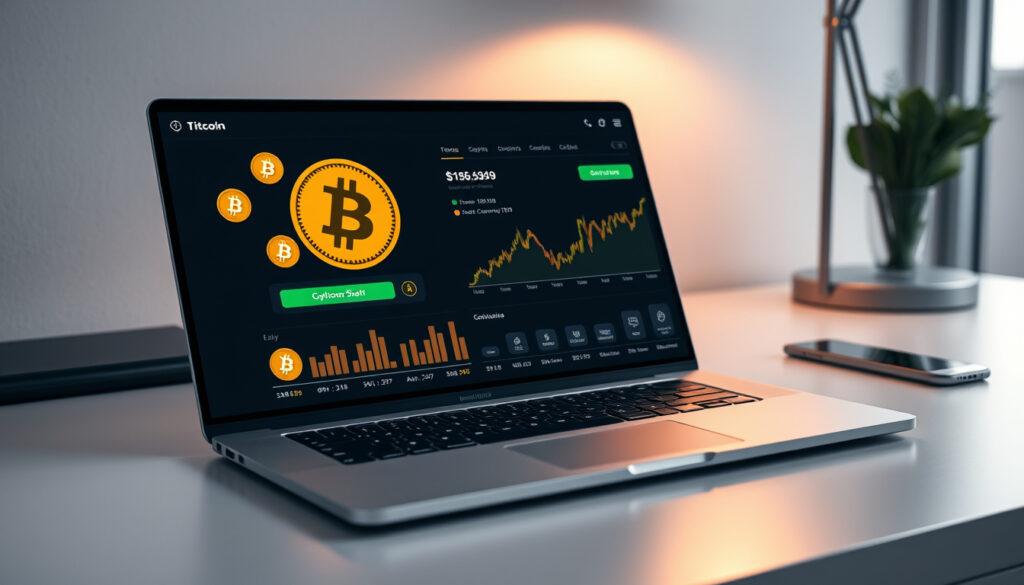
How to Buy Bitcoin – Step-by-Step Guide for Beginners
Buying Bitcoin has become increasingly accessible, with regulated exchanges offering straightforward pathways for new investors. Understanding the fundamentals of purchasing, securing, and storing Bitcoin remains essential for anyone entering the cryptocurrency market for the first time.
The process involves selecting a reputable platform, completing identity verification, funding an account, and deciding on storage options. Each step carries implications for security, costs, and long-term management of digital assets.
How Do I Buy Bitcoin? Step-by-Step Guide
For most beginners, centralized cryptocurrency exchanges represent the safest entry point into Bitcoin ownership. These platforms provide regulated environments with security measures that significantly reduce risks compared to peer-to-peer methods or automated teller machines.
Select platforms like Coinbase, Kraken, or Crypto.com with strong security records and user-friendly interfaces.
Complete mandatory identity verification by uploading government-issued ID, a selfie, and proof of address.
Link a bank account, debit card, or existing balance to purchase Bitcoin at current market rates.
Transfer holdings to a personal wallet for self-custody, or explore Bitcoin ETFs for simplified management.
Key Insights Before You Start
- Exchange fees typically range from 0.5% to 4% depending on payment method and platform—credit card purchases incur the highest costs at 2-4% additional.
- Bitcoin ATMs should be avoided by beginners due to fees reaching 15% or more and limited regulatory protections.
- Fractional buying is fully supported on all major exchanges, allowing purchases of small amounts like $10 or $25 worth of Bitcoin.
- Dollar-cost averaging (DCA) enables regular small purchases that smooth out volatility over time rather than attempting market timing.
- Self-custody provides full control but requires understanding of wallet security, seed phrases, and private key management.
- Bitcoin ETFs offer exposure without direct ownership, suitable for those preferring traditional brokerage accounts.
| Platform | Beginner-Friendly | BTC Withdrawal | Typical Fees | Payment Methods |
|---|---|---|---|---|
| Coinbase | Yes | Yes | 1-4% | Bank, card, wallet |
| Kraken | Yes (advanced) | Yes | 0.16-0.26% | Bank, card |
| Crypto.com | Yes | Yes | Medium | Card, bank, fiat |
| PayPal | Yes (casual) | Limited | 1-4% | Balance, card |
Swan Bitcoin offers zero fees on the first $10,000 for direct purchases with wallet transfer, making it attractive for consistent DCA strategies. Daily limits after verification typically range from $1,000 to $50,000 or more depending on the platform and account age.
What Are the Safest Ways to Buy Bitcoin?
Safety in Bitcoin acquisition encompasses multiple dimensions: platform security, payment method reliability, and storage practices. Regulated exchanges with robust Know Your Customer (KYC) procedures represent the foundation of secure purchasing.
Platform Security Standards
Reputable exchanges implement multiple layers of protection including two-factor authentication (2FA), cold storage for majority of assets, and insurance mechanisms against hacking incidents. Coinbase, for instance, maintains FDIC-like insurance for cash balances held on the platform.
Enable two-factor authentication using Google Authenticator or dedicated authenticator apps rather than SMS-based 2FA immediately upon account creation. This single step significantly reduces unauthorized access risk.
Avoiding High-Risk Methods
Bitcoin ATMs present substantial concerns for new investors. Fees commonly reach 15% or higher, and anonymity requirements create opportunities for scams. Unverified peer-to-peer platforms similarly carry elevated fraud risk and limited recourse for disputes.
Purchasing through no-KYC exchanges or cash meetings, while technically possible, introduces regulatory uncertainty and practical dangers that outweigh benefits for most users. Those seeking privacy should consult local regulations and understand that such transactions may carry legal implications.
How to Buy Bitcoin with Credit Card or PayPal?
Credit card purchases offer immediacy but come with notable cost considerations. Both Coinbase and Crypto.com support instant buying with credit cards, though fees typically add 2-4% on top of transaction costs. This method suits situations requiring immediate acquisition rather than cost-optimized investing.
PayPal and Cash App Options
PayPal and Cash App provide streamlined experiences for casual Bitcoin purchases. Users can buy Bitcoin directly within these applications, with fees hovering around 1-4% depending on transaction size. However, these platforms impose limitations on transferring purchased Bitcoin to external wallets.
Those requiring full ownership with withdrawal capabilities should prioritize exchanges that enable direct wallet transfers. PayPal’s limitations mean users technically do not hold private keys for Bitcoin purchased through their service.
Bank Transfers and ACH
Bank account transfers via ACH represent the most cost-effective method for most investors. While processing takes 1-5 business days, fees are substantially lower than card purchases. Wire transfers offer faster processing for those willing to pay slightly higher costs.
Bank transfers typically cost 0-1% in fees and suit planned, larger purchases. Credit cards enable instant acquisition at 2-4% additional cost, making them appropriate for smaller, urgent buys rather than ongoing investment strategies.
How Much Bitcoin Should You Buy and When?
Determining investment amount requires honest assessment of financial situation, risk tolerance, and investment timeline. Experts consistently recommend starting with amounts that will not cause financial distress if lost entirely, given Bitcoin’s well-documented price volatility.
The Case for Starting Small
Many experienced investors suggest beginning with $50 to $500 as an initial position. This range allows familiarization with exchange interfaces, wallet management, and price monitoring without exposing significant capital during the learning phase. As confidence builds, position sizes can increase appropriately.
Bitcoin has experienced dramatic price swings, including drops exceeding 50% during market downturns. Never invest money needed for essential expenses, and consider the potential impact of total loss when sizing positions. Here’s a step-by-step guide on how to buy Bitcoin, with helpful links to Comprar Bitcoin pas a pas.
Dollar-Cost Averaging Strategy
Rather than attempting to time market entry, dollar-cost averaging involves purchasing fixed dollar amounts at regular intervals regardless of price. This approach smooths entry points over time and removes emotional decision-making from the investment process.
Most major exchanges now offer recurring purchase features that automate DCA strategies. Whether weekly, biweekly, or monthly—consistent small purchases accumulate meaningful positions over extended periods without requiring market prediction.
The Process: From Account Creation to Ownership
Understanding the sequential nature of Bitcoin acquisition helps manage expectations and reduces confusion during the first experience. The journey from registration to holding Bitcoin typically follows a predictable progression.
- Account Creation: Download the exchange application or visit the website. Register using an active email address, create a strong password incorporating letters, numbers, and symbols, and provide a phone number for verification purposes.
- Identity Verification: Complete KYC requirements by uploading a government-issued photo ID (passport or driver’s license), taking a selfie for identity confirmation, and providing proof of address documentation. Processing time ranges from minutes to several days depending on platform volume.
- Funding the Account: Link a payment method—bank account, debit card, or existing platform balance. Initiate a deposit, noting that bank transfers require patience while card deposits credit immediately.
- Placing the Purchase Order: Navigate to the buying interface, select Bitcoin (BTC), enter the desired amount (whether dollar value or BTC quantity), choose order type (market for instant execution, limit for price targeting), and confirm the transaction after reviewing associated fees.
- Securing Your Holdings: Decide between maintaining Bitcoin on the exchange for convenience or transferring to a personal wallet for self-custody. Hardware wallets provide the highest security for significant holdings.
What’s Certain and What’s Uncertain in Bitcoin Buying?
| Established Information | Areas of Uncertainty |
|---|---|
| Regulated exchanges (Coinbase, Kraken, Crypto.com) provide secure purchasing environments with KYC requirements, insurance protections, and 2FA availability. | Future regulatory changes may impact how exchanges operate, KYC requirements, or taxation treatment of Bitcoin holdings. |
| Bitcoin’s price remains highly volatile, with historical swings far exceeding traditional investment assets. | Whether current or future price levels represent good entry points cannot be reliably determined in advance. |
| Self-custody via hardware wallets provides maximum security and complete control over Bitcoin holdings. | Specific platform fee structures may change, and promotional offers (like Swan Bitcoin’s zero-fee first $10,000) have defined eligibility windows. |
| Dollar-cost averaging has demonstrated effectiveness in reducing impact of volatility on overall purchase price. | Long-term price trajectory remains subject to debate among analysts and cannot be predicted with certainty. |
Understanding the Bitcoin Market Context
Bitcoin operates within a unique intersection of technology, finance, and regulatory frameworks. Understanding this context helps investors make informed decisions beyond simple purchase mechanics.
The cryptocurrency market has matured significantly since Bitcoin’s introduction, with institutional adoption increasing steadily. Major financial firms now offer Bitcoin-related products, and regulatory bodies including the SEC and FinCEN provide ongoing guidance for market participants.
However, the underlying technology and market structure continue evolving. Network upgrades, competing cryptocurrencies, and shifting investor sentiment all influence Bitcoin’s value proposition. Those interested in deeper understanding should explore resources from Investopedia’s Bitcoin overview and CoinDesk’s educational materials.
For Canadian readers considering related financial planning, understanding take-home compensation provides valuable context. Salary After Tax Ontario calculations demonstrate how disposable income might accommodate investment decisions.
Similarly, those evaluating career opportunities in aviation may find Air Canada Flight Attendant compensation data interesting when considering diverse income streams that could support investment activities.
What Experts and Sources Say
“The safest way for beginners to buy Bitcoin is through reputable centralized cryptocurrency exchanges which offer strong security, insurance, and user-friendly interfaces.”
— Crypto.com Education Team
“Regulated exchanges with FDIC-like insurance, two-factor authentication, and cold storage represent the safest approach for new cryptocurrency investors.”
— NerdWallet Investment Analysis
“Dollar-cost averaging is ideal for beginners to mitigate volatility, regardless of perceived market timing.”
— Swan Bitcoin Educational Resources
Security guidance from multiple sources emphasizes avoiding unsolicited investment offers, verifying website URLs before entering credentials, and never sharing seed phrases or private keys regardless of circumstances presented.
Key Takeaways
Buying Bitcoin safely requires selecting reputable platforms, completing necessary verification, and making informed decisions about storage. For most beginners, established exchanges like Coinbase or Kraken provide the appropriate balance of accessibility and security. Payment method selection significantly impacts costs, with bank transfers offering the most economical approach for planned purchases.
Regardless of entry point, self-custody through personal wallets ultimately provides the most complete ownership experience. Dollar-cost averaging strategies reduce exposure to volatility, and starting with modest amounts allows learning without substantial risk exposure. Those seeking simplified management without direct ownership can explore Bitcoin ETFs through traditional brokerage accounts.
Frequently Asked Questions
Can I buy a fraction of Bitcoin?
Yes, all major exchanges support fractional purchases. You can buy amounts as small as $10 or less, representing fractions of a single Bitcoin based on current market prices.
How to buy Bitcoin anonymously?
True anonymity requires no-KYC exchanges or cash transactions, but these methods carry high scam risk (15%+ fees) and potential regulatory issues. For safety, beginners should use regulated KYC-compliant platforms.
What’s the cheapest way to buy Bitcoin?
Bank account transfers via ACH typically incur the lowest fees at 0-1%, followed by limit orders on exchanges like Kraken offering 0.16-0.26% for higher volumes. Swan Bitcoin offers zero fees on the first $10,000.
Is it safe to keep Bitcoin on an exchange?
Exchange wallets offer convenience but expose holdings to platform-specific risks including hacks and potential service interruptions. For long-term storage, transferring to a personal hardware wallet provides superior security.
Do I need a wallet to buy Bitcoin?
No, exchanges provide built-in wallets for immediate storage. However, for full ownership and maximum security, transferring to a personal wallet is recommended once you accumulate meaningful holdings.
How long does it take to buy Bitcoin?
Credit card and market orders execute instantly. Bank transfers via ACH typically require 1-5 business days to clear. KYC verification can take anywhere from minutes to several days depending on platform volume.
More related posts
 Did Pierre Poilievre Win His Seat – 80% Victory in Alberta
 Happy Fathers Day Dad Wishes Quotes – Heartfelt, Funny Messages for Cards
 Life Path Number Calculator: How to Calculate & What It Means
 Chick-fil-A UK Menu: Prices, Nutrition & Popular Items
 Kafka on the Shore – Plot Summary and Ending Explained
 Grand Bahia Principe Aquamarine – Adults-Only Punta Cana Resort Facts
 Caught Stealing (Film): Good or Flop? Cast & Where to Watch
 1 Canadian Dollars in Rupees – Live Exchange Rate and Trends