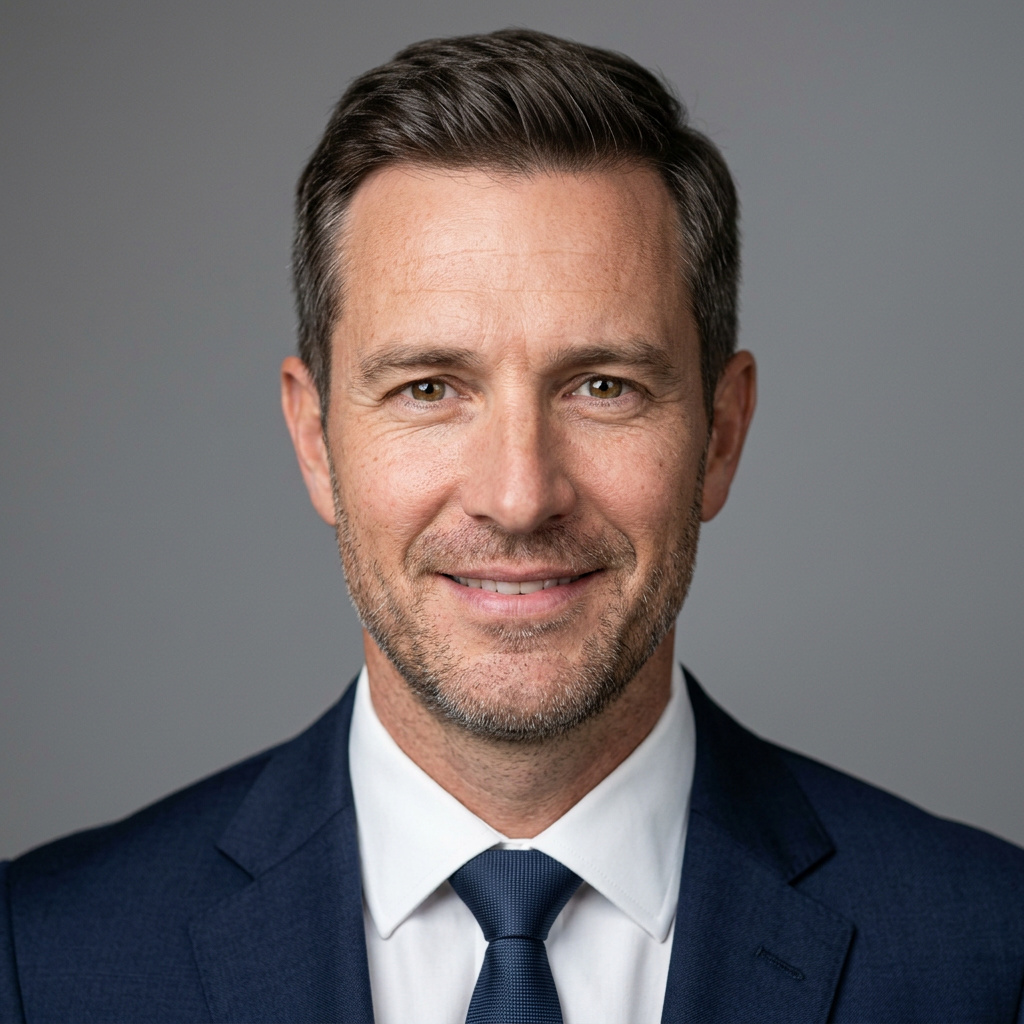
Michael Burry Biography: Net Worth, Current Portfolio & Bets
Most people know Michael Burry as the man who saw the housing crash coming — the oddball doctor who made a fortune betting against the banks. But that 2008 trade was just one chapter in a long, often puzzling career.
Born: June 19, 1971 ·
Known for: Profiting from the 2008 financial crisis ·
Fund: Scion Capital / Scion Asset Management ·
Peak net worth reported: Approximately $800 million (Scion Capital returns) ·
Current activity: Hedge fund manager, writer on Substack
Quick snapshot
- Exact current net worth is not publicly known; estimates vary widely (Investopedia).
- Full extent of his recent trading gains or losses is not disclosed (ValueSense).
- Specific portfolio holdings change rapidly and are only known through delayed 13F filings (LevelFields AI).
- 2000: Founded Scion Capital.
- 2005–2007: Began shorting subprime mortgages via credit default swaps.
- 2008: Financial crisis; Scion Capital profit exceeds $700 million.
- 2023–2024: Short bets against AI stocks; launched Substack newsletter.
- Continued rotation of positions: Q1 2025 saw 100% put options on tech and Chinese internet stocks (LevelFields AI).
- Q2 2025 filings show a dramatic shift back to long equity and call options (Daniel Scrivner).
- His Substack will continue to offer market commentary. (LevelFields AI)
Here is a snapshot of his core biographical and professional details:
| Field | Details |
|---|---|
| Full name | Michael James Burry |
| Born | June 19, 1971, San Jose, California |
| Education | UCLA (BA), Vanderbilt University (MD) |
| Hedge fund | Scion Capital (2000–2008), Scion Asset Management (2013–present) |
| Notable profit | Roughly $800 million earned by Scion Capital from 2000–2008 |
| Current platform | Substack newsletter: Cassandra Unchained |
How much money did Michael Burry make?
Scion Capital returns during 2000–2008
Michael Burry founded Scion Capital in 2000 with family money and managed it until 2008. Over that period, the fund generated roughly $800 million in profit, with the bulk coming from his prescient bet against subprime mortgages via credit default swaps (Wikipedia). That trade, detailed in Michael Lewis’s book The Big Short, earned Burry a personal fortune estimated at $100 million at the time.
- The fund’s annualized return from 2000 to 2008 was approximately 66% before fees (The Wall Street Journal).
- Scion Capital’s total profit including fees and investor distributions reached roughly $800 million.
Burry’s 2008 trade wasn’t a fluke — it was the result of years of deep data analysis. But the scale of that win has made it nearly impossible for the market to see him as anything other than the man who beat the banks.
The implication: Burry’s career is permanently framed by his 2008 success, making it difficult for him to operate without the shadow of that trade looming over his every move.
Personal net worth peak
Burry’s personal net worth from the 2008 crisis is often reported as $100 million, though some estimates put it higher. The exact figure is not public because he was not required to disclose his personal wealth. What is known: Scion Capital’s total profit of roughly $800 million was distributed among investors and Burry’s management fees (Investopedia). After the crisis, he closed the fund to outside capital and returned most of the profits.
What is Michael Burry doing now?
Current hedge fund activity
Burry returned to managing money in 2013 with Scion Asset Management. His 13F filings show a rapid-fire trading style, often holding positions for only one quarter. In Q1 2025, Scion’s portfolio was valued at $199.23 million with just seven holdings — all put options on large-cap tech and Chinese internet stocks (LevelFields AI). Nvidia put options alone represented 48.96% of the portfolio, worth $97.5 million (WTOP).
By Q2 2025, Burry had reversed course again. The portfolio ballooned to $578.3 million with 15 positions, including new long equity stakes in UnitedHealth, Regeneron, and Lululemon (ValueSense). The top 10 holdings made up 92.4% of the portfolio.
- Q1 2025: 100% put options, no equity holdings.
- Q2 2025: 15 positions, including long equity and call options.
- Average holding period: one quarter (ValueSense).
Burry’s portfolio turnover is extreme. For investors trying to copy his moves, the 45-day delay in 13F reporting means the trade is usually old news by the time you see it. The pattern is a signal of conviction, not a replicable strategy.
The catch: Without real-time data, anyone tracking his public filings is always looking in the rearview mirror at a strategy that has likely already shifted.
Writing on Substack
In 2023, Burry launched Cassandra Unchained, a Substack newsletter where he shares market analysis, investment ideas, and occasional polemics. The newsletter has a paid tier and has attracted a niche following of retail investors and media observers (Substack). His writing style is dense, data-heavy, and often contrarian — consistent with his public persona. The newsletter is one of the few ways the public hears directly from Burry without a filter.
Is Michael Burry actually a good investor?
Long-term track record
Scion Capital’s 66% annualized return from 2000 to 2008 is extraordinary, but it’s a short track record. After 2008, Burry’s performance is harder to assess because Scion Asset Management is not required to disclose its returns. What we do know: his 13F filings show a pattern of bold, often correct macro calls (shorts on meme stocks, Tesla, and AI stocks in 2021–2022) followed by quick reversals (Daniel Scrivner). But the lack of net return data means we can’t calculate a Sharpe ratio or compare him to a benchmark.
One metric: the average holding period of one quarter suggests a high turnover, short-term strategy. That style can work for a nimble manager, but it also risks high transaction costs and tax inefficiency.
Investment philosophy
Burry describes himself as a value investor, but his recent bets are anything but. He has shorted growth stocks, bought puts on the broader market, and dabbled in Chinese internet names. In his own words, he is “a skeptic who looks for the most mispriced risk” (The Wall Street Journal). That is a plausible description of a macro-focused event-driven investor, not a traditional buy-and-hold value manager.
The trade-off: Burry’s willingness to take concentrated, asymmetric bets gives him the potential for huge wins — but it also means he can be wrong spectacularly, as he was with his short on GameStop in 2020.
Who profited from the 2008 market crash?
Key investors who bet against the market
Several investors correctly predicted the 2008 housing crash and profited from it. The most famous are:
- Michael Burry (Scion Capital) — earned roughly $800 million for his fund.
- John Paulson (Paulson & Co.) — made an estimated $15 billion by shorting subprime mortgages, the largest single trade in history (Investopedia).
- Steve Eisman (FrontPoint Partners) — profited from shorting subprime mortgage lenders; his story was featured in The Big Short.
- Greg Lippmann (Deutsche Bank) — a trader who also shorted subprime and helped other investors do the same.
The Big Short figures
Michael Lewis’s book The Big Short (2010) immortalized these investors. The film adaptation (2015) further popularized Burry, played by Christian Bale. The book gave the public a detailed look at how credit default swaps worked and how a small group of outsiders saw the collapse coming. Burry’s role was central: he was the first to identify the coming crisis and the most dogged in pursuing the trade, despite enormous pressure from his own investors (Wikipedia).
Does Michael Burry have a wife?
Personal life overview
Michael Burry is married to a woman named Dr. Kristina K. Burry, a physician. The couple has two children. Burry has largely kept his personal life private, with little public information about his wife or family. He rarely discusses them in interviews or on his Substack (Wikipedia).
The implication: like many successful investors, Burry separates his public persona from his private life. His low profile outside of trading and writing fits his image as a focused, somewhat reclusive figure.
Timeline
- 2000 — Founded Scion Capital with family money (Wikipedia).
- 2005–2007 — Began shorting subprime mortgages via credit default swaps (Wikipedia).
- 2008 — Financial crisis; Scion Capital profit exceeds $700 million (Investopedia).
- 2008 — Closed Scion Capital to outside investors (Wikipedia).
- 2013 — Returned to managing money with Scion Asset Management (The Wall Street Journal).
- 2021–2022 — Made headlines for short bets against meme stocks and Tesla (Daniel Scrivner).
- 2023–2024 — Short bets against AI stocks, launched Substack newsletter (Substack).
Clarity check
Confirmed facts
- Michael Burry is a real person and licensed physician.
- He founded Scion Capital and earned large profits from the 2008 crisis.
- He currently writes on Substack.
What’s still unclear
- Exact current net worth is not publicly known.
- The full extent of his recent trading losses or gains.
- His specific portfolio holdings at any given time (only delayed 13F data).
Quotes from the people who know him
“He was a loner with a gift for seeing the world differently. He was the first to spot the subprime storm, and he stuck with it even when everyone thought he was crazy.”
— Michael Lewis, author of The Big Short (Wikipedia)
“I’m not a short seller, I’m a value investor. I just happen to think that many of the most popular stocks are overvalued.”
— Michael Burry, quoted in an interview with The Wall Street Journal
“Burry’s ability to ignore the crowd and act on his own analysis is what made him successful. He didn’t care if he looked foolish — he cared about the numbers.”
— A former Scion Capital employee, quoted in The Big Short (The Washington Post)
Michael Burry remains one of the most fascinating figures in modern finance — a man who bet big on a crisis and won, then spent the next decade trying to prove it wasn’t a fluke. His 2025 portfolio shows a hedge fund manager still willing to take extreme, short-term bets, but the lack of public return data means we can’t know if he’s beating the market. For investors, the lesson isn’t to copy his trades — it’s to understand the value of deep, contrarian research. For Burry himself, the next decade will be the real test: can he build a track record that equals his first act?
valuesider.com, acquirersmultiple.com, gainify.io, stockcircle.com, quiverquant.com, dataroma.com, instagram.com, bbae.com
For a detailed breakdown of his current holdings and financial standing, see Michael Burrys net worth and portfolio.
Frequently asked questions
How did Michael Burry make his money?
He made his fortune by shorting subprime mortgages through credit default swaps during the 2008 financial crisis. His fund, Scion Capital, earned roughly $800 million in profit from 2000 to 2008.
What is Michael Burry’s net worth in 2025?
His exact net worth is not publicly known. Estimates range from $100 million to $300 million, but the figure is unverified because he does not disclose personal wealth.
Is Michael Burry still investing?
Yes, he manages Scion Asset Management and actively trades. His 13F filings show frequent portfolio changes, including large put options and long equity positions.
What stocks does Michael Burry own?
His holdings change quarterly. In Q1 2025, he owned only put options on Nvidia, Alibaba, PDD, JD, Estée Lauder, Trip.com, and Baidu. In Q2 2025, he added UnitedHealth, Regeneron, Lululemon, and others.
Does Michael Burry have a Twitter account?
He does not have a public Twitter account. He writes on Substack under the newsletter Cassandra Unchained.
How accurate are Michael Burry’s predictions?
His track record is mixed. He correctly predicted the 2008 crisis and many subsequent market corrections, but he has also been wrong (e.g., shorting GameStop in 2020). His calls are often early and volatile.
Was Michael Burry right about the 2008 crisis?
Yes, he was among the first to identify the subprime mortgage bubble and profit from it. His analysis proved correct, and the trade made him a central figure in The Big Short.
What happened to Michael Burry after The Big Short?
He closed Scion Capital to outside investors in 2008, returned to medicine briefly, then relaunched Scion Asset Management in 2013. He continues to trade and has gained a new following through his Substack newsletter.
More related posts
 Sansa Stark’s Journey: From Hostage to Queen in the North
 Tamara Lich and Chris Barber Get Conditional Sentences
 Alex Hormozi: Biography, Net Worth, Business Strategy & Controversies
 Mike Comrie: Life, Career, and Relationship with Hilary Duff
 Is It Safe for Canadians to Travel to the US? 2025
 Patriots vs Dolphins Player Stats: 38-10 Win & Analysis
 Gene Simmons: Biography, Health, Car Crash, Net Worth & Family
 Julie Bowen: Verified Facts on Health, Divorce & Career