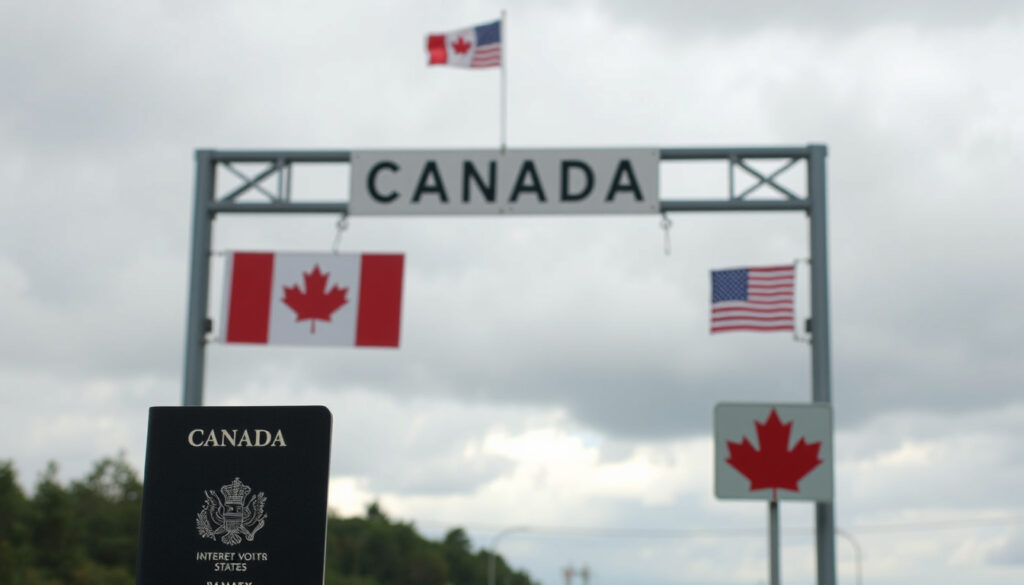
Is It Safe for Canadians to Travel to the US? 2025
As a Canadian, planning a trip to the United States used to feel routine—pack a bag, grab your passport, and go. Lately, though, headlines about border detentions and new registration rules have made a lot of people pause and wonder: how much has actually changed? This guide pulls together the latest official advisories, real entry rules, and the stories behind the rising anxiety, so you can decide what risk you’re comfortable with.
U.S. travel advisory for Canada: Level 1 (Exercise Normal Precautions) · Canadian government advisory for U.S.: Exercise normal security precautions · Registration required for stays over 30 days: Yes
Quick snapshot
- U.S. travel advisory for Canada is Level 1 – Exercise Normal Precautions (U.S. Department of State)
- Canadian government recommends normal security precautions for travel to the U.S. (Government of Canada Travel Advice)
- Registration mandatory for stays of 30 days or longer (U.S. Embassy Canada)
- Exact number of Canadian detentions at border – no official public statistic (Barclay Damon legal guidance)
- Future policy changes on entry rules remain uncertain (Barclay Damon legal guidance)
- Precise impact of detention incidents on overall Canadian travel sentiment (Barclay Damon legal guidance)
- Whether CBP device searches without warrant are consistently applied – legal guidance notes discretion (Barclay Damon legal guidance)
- 2023–2024: Increased reports of Canadians detained at U.S. border (Barclay Damon legal guidance)
- 2024: Forbes reports one-year decline in Canadian visits to U.S. (Forbes)
- 2025: U.S. reaffirms long-standing registration rule for stays >30 days (U.S. Embassy Canada)
- Travelers should expect thorough questioning and device checks at entry (Barclay Damon legal guidance)
- Canadian tourism to U.S. may continue to shift as awareness grows (Barclay Damon legal guidance)
Four key takeaways from official sources, one pattern: safety on the ground is not the real concern — it’s the unpredictable border entry process that creates the most risk for Canadians.
| Factor | Details |
|---|---|
| U.S. advisory level for Canada | Level 1 – Exercise Normal Precautions |
| Canadian advisory level for U.S. | Exercise normal security precautions |
| Registration required for stays >30 days | Yes – applies since April 11, 2025 |
| Documents for air entry | Valid passport (or NEXUS card from Canada) (U.S. CBP Help Center) |
| Documents for land/sea entry (age 16+) | Passport, Enhanced DL, Trusted Traveler card, or Secure Certificate of Indian Status |
| Common denial reasons | Criminal record, incomplete docs, overstay, misrepresentation |
| Penalty for non-compliance (registration) | Fines, misdemeanor prosecution |
| Device search allowed? | Yes – CBP can search phones and electronics without warrant |
Is it safe for Canadians to travel to the USA?
What the U.S. travel advisory says
The U.S. Department of State currently rates Canada at Level 1 – Exercise Normal Precautions, the lowest advisory level (U.S. Department of State). This means the official U.S. government does not assess a heightened safety risk for Canadians while inside the country — the advisory is about behavior in the U.S., not about entry.
What the Canadian government advises
Canada’s travel advisory for the United States recommends that Canadians exercise normal security precautions (Government of Canada Travel Advice). The advisory does not warn against travel, but it does caution that the Government of Canada cannot intervene if a traveler does not meet U.S. entry requirements. That distinction is the core of the current uncertainty.
Real incidents reported by travelers
- Legal professionals such as Barclay Damon report a rise in Canadian travelers being questioned in depth and, in some cases, denied entry (Barclay Damon legal guidance).
- U.S. Customs and Border Protection officers can search phones, luggage, and vehicles without a warrant (Barclay Damon legal guidance).
- As one Reddit user summarized: “99.9% you will be fine. It is the 1% of times that you have to worry about, and when it goes wrong, boy does it go wrong.” (Reddit anecdote)
Both governments say travel is safe — but the risk is not on the streets of New York or Los Angeles. It’s at the border booth, where the burden of proof falls entirely on the traveler.
The implication: for the vast majority of Canadians, a trip to the U.S. will pass without incident. But the unpredictability of border discretion means the risk is real, even if the probability is low.
What are some reasons Canadians may be denied entry at the U.S. border?
Incomplete documentation
Every Canadian crossing into the U.S. by air needs a valid passport (or NEXUS card if flying from Canada) (U.S. CBP Help Center). By land or sea, a passport, enhanced driver’s licence, Trusted Traveler card, or Secure Certificate of Indian Status works (Government of Canada Travel Advice). Missing or expired documents are the most straightforward reason for denial.
Criminal inadmissibility
A criminal record — even a DUI that would be a summary offence in Canada — can make a Canadian inadmissible to the U.S. (Barclay Damon legal guidance). Waivers exist but require advance application.
Overstaying previous visits
Overstaying a prior visit or working without authorization creates a record that can trigger denial on the next attempt (Barclay Damon legal guidance). The U.S. government expects strict adherence to the terms of admission.
Misrepresentation or fraud
Providing false information or being evasive about your travel purpose is grounds for denial and can lead to a permanent bar (Barclay Damon legal guidance). CBP officers are trained to probe for inconsistencies.
The trade-off: Canadians who have a straightforward travel history and carry the right documents will rarely face trouble. But those with any legal or paperwork grey area should expect a higher level of scrutiny.
Why are Canadians being detained at the border?
Common scenarios leading to detention
- Suspicion of intending to work or overstay (Barclay Damon legal guidance)
- Inconsistent answers about trip purpose or ties to Canada
- Prior immigration violations
Rights of Canadian travelers when detained
Detained Canadians have the right to know why they’re being held and to contact the Canadian consulate (Government of Canada Travel Advice). However, the government cannot stop removal if entry is denied.
Notable cases and media reports
High-profile cases — including a Canadian woman detained for hours over a misunderstood visa status — have circulated on social media and in news reports, amplifying perceptions of risk. Official data on total detentions is not publicly available, making it hard to gauge the true scale (Barclay Damon legal guidance).
Detention often stems not from wrongdoing, but from a CBP officer’s discretion. The same behavior that passes one day can trigger a flag the next.
Why this matters: without transparent statistics, travelers are flying blind. The absence of data makes every anecdote more powerful.
Is Canada on the U.S. travel ban list?
Current status of Canada on U.S. travel restrictions
Canada is not on any current U.S. travel ban list. Canadian citizens face no country-specific restrictions beyond standard visa-waiver rules (U.S. Department of State).
Historical context (COVID-era bans)
During the COVID-19 pandemic, non-essential land border travel was restricted for months. Those restrictions were lifted in 2021, and no similar measures are in place today.
Comparison with other countries
Unlike travelers from countries on the Trump-era travel ban list (e.g., Iran, Syria, Yemen), Canadians face no presumption of inadmissibility based on nationality alone. The key difference is that Canadians are visa-exempt but still subject to officer discretion.
The pattern: Canada benefits from a privileged status, but that status does not guarantee entry — it only removes the visa requirement. The legal burden remains with the traveler.
Are Canadians refusing to travel to the US?
Statistics on Canadian visits to the U.S.
Forbes reported a one-year decline in Canadian visits to the U.S., citing border incidents and shifting public sentiment (Forbes). While official 2025 numbers are not yet fully compiled, the trend appears real.
Reasons for decline: safety concerns, policy changes, economic factors
- Safety concerns: High-profile detention stories dominate social media, raising anxiety even if most travelers have no problems.
- Policy changes: The 2025 reminder of the 30-day registration rule caught many travelers off guard (U.S. Embassy Canada).
- Economic factors: A fluctuating exchange rate also plays a role. For those planning extended stays, a good travel rewards card can help offset costs.
Future outlook
Industry analysts suggest that unless the U.S. provides clearer communication about entry processes, the decline in Canadian tourism may continue. The Canadian government’s advisory remains unchanged, but traveler behavior is already shifting.
The catch: official advisories haven’t moved, but the sentiment has. Perception is outpacing policy.
Upsides
- U.S. and Canadian governments both classify travel as low-risk in terms of safety
- Clear documentation rules — predictable for prepared travelers
- No visa required for stays under 6 months in most cases
- Canada is not on any U.S. travel ban list
Downsides
- CBP officers have broad discretion to deny entry without explanation
- Electronics can be searched without a warrant
- Registration rule for stays >30 days is easily overlooked
- No official data on detention rates creates uncertainty
Timeline of key events for Canadian travelers to the U.S.
- 2023–2024 – Increased reports of Canadian travelers detained at U.S. border (Barclay Damon legal guidance)
- 2024 – Forbes reports one-year decline in Canadian visits to U.S. (Forbes)
- 2025 – U.S. Embassy reminds Canadians that 30-day registration rule is not new but is newly enforced (U.S. Embassy Canada)
Confirmed facts vs. what’s unclear
Confirmed facts
- U.S. travel advisory for Canada is Level 1 (U.S. Department of State)
- Canadians need valid passport for air entry (Government of Canada Travel Advice)
- Registration required for stays over 30 days (U.S. Embassy Canada)
- Canada not on U.S. travel ban list (U.S. Department of State)
What’s unclear
- Exact number of Canadian detentions (no official statistic)
- Future policy changes regarding entry rules
- Precise impact of detention incidents on overall travel numbers
- Consistency of CBP device searches without warrant – legal guidance notes discretion
What travelers and officials are saying
Canadians and other foreign nationals visiting the United States for periods longer than 30 days must be registered with the United States Government.
– Government of Canada Travel Advice, travel.gc.ca
Canada travel advisory: Level 1 – Exercise Normal Precautions.
– U.S. Department of State, travel.state.gov
99.9% you will be fine. It is the 1% of times that you have to worry about, and when it goes wrong, boy does it go wrong.
– Reddit user comment (anecdotal)
For Canadian travelers, the safety question is not about crime rates or terrorism—it’s about the border. The U.S. entry process is the only real source of risk, and it’s a risk that is administrative, not physical. For the prepared traveler, the probability of a problem is low. But with no official data on detentions and broad officer discretion, the margin of error is thinner than it used to be. For Canadians who value predictability, the clearest advice is: get your documents right, be honest at the booth, and plan for the 1%—or reconsider whether the trip is worth the uncertainty.
Related reading: Is It Safe for Canadians to Travel to the US? (2025)
For Canadians wondering about safety across the border, the latest Canada-US travel advisory outlines entry rules and risk factors travelers should consider.
Frequently asked questions
Do I need a visa to visit the U.S. from Canada?
No, Canadian citizens do not need a visa for tourist or business visits under 6 months, but they must meet all entry requirements.
Can I drive a rental car across the U.S. border?
Yes, but the rental company’s cross-border policy applies – check with the provider and bring proof of insurance.
What happens if I am denied entry at the U.S. border?
You will be returned to Canada. You have the right to ask why, but the Canadian government cannot intervene on your behalf if you do not meet requirements.
How long can a Canadian stay in the U.S. without a visa?
Up to 6 months per visit. Stays of 30 days or longer require registration with U.S. Citizenship and Immigration Services.
Are there any health requirements for U.S. entry?
No COVID-19 vaccination or testing requirements are currently in place, but routine vaccines are recommended.
What should I do if I feel my rights were violated at the border?
Contact the Canadian consulate as soon as possible. Document the incident and consider filing a complaint with U.S. CBP.
Can I work remotely while in the U.S. on a tourist visit?
Generally no. Remote work for a non-U.S. employer may be allowed in practice, but CBP officers may interpret it as unauthorized employment. Risk varies.
More related posts
 Constantine (Film) – Plot, Cast, Comics Ties and Sequel
 Salary After Tax Ontario – 2024 Brackets and Net Pay Guide
 Cast of Karen Pirie: Season 1 & 2 Actors and Characters
 Costco Canada Food Recall: 2026 List & Refunds
 Bill Gates: Biography, Net Worth, Religion, and Facts (2025)
 Apartments for Rent London Ontario – 2025 Prices Vacancy Trends
 Niagara-on-the-Lake Travel Guide: Things to Do, Wineries & More
 Best Prenatal Vitamins Canada – Expert Picks for 2025