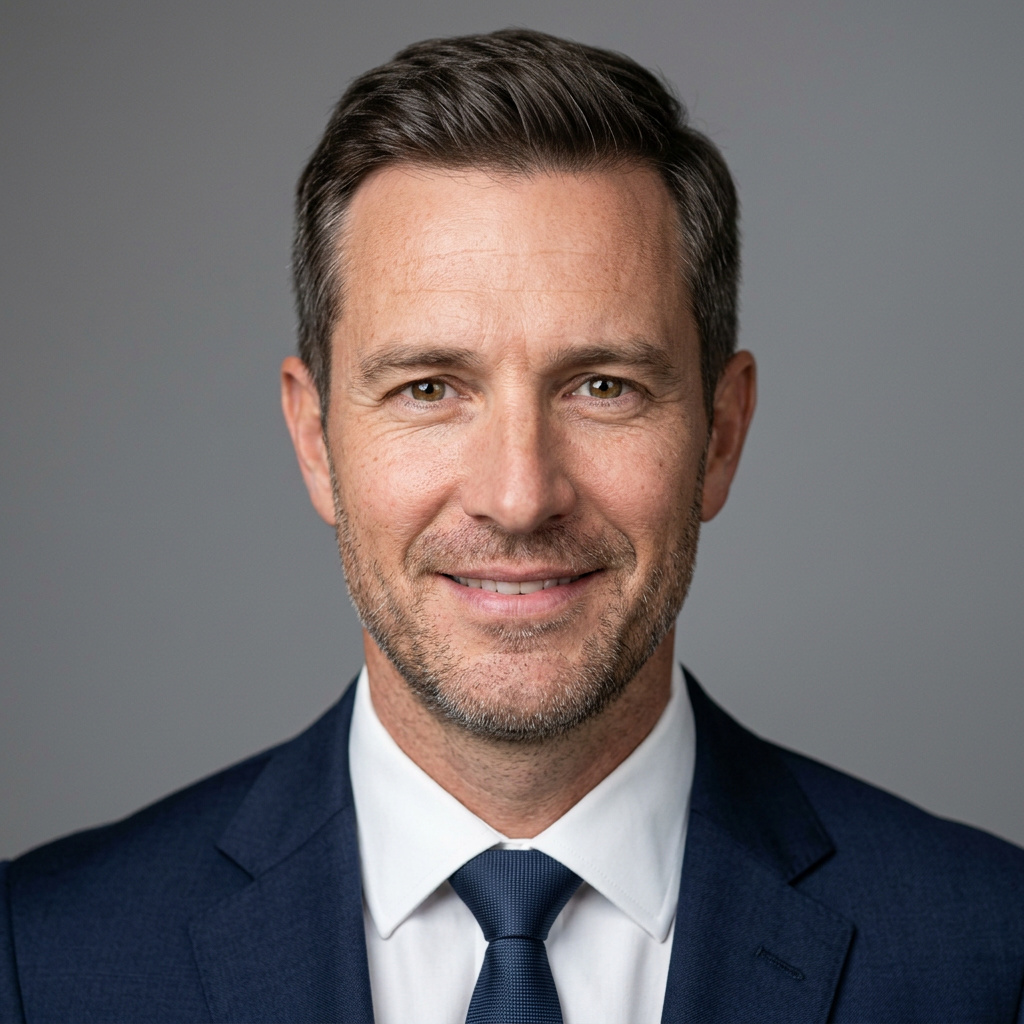
Henry Kissinger: Biography, Controversies, and Legacy
Few figures in American history inspire such starkly different judgments as Henry Kissinger. He was simultaneously a Nobel Peace Prize winner and a diplomat accused of war crimes, a realpolitik thinker who opened China and escalated conflicts in Southeast Asia. This article separates the documented record from the charges, drawing on official archives and independent investigations to assess the man behind the contradictions.
Born: May 27, 1923, Fürth, Germany ·
Died: November 29, 2023, Kent, Connecticut, U.S. ·
Secretary of State: 1973–1977 ·
Nobel Peace Prize: 1973 (shared with Lê Đức Thọ) ·
Key Foreign Policy: Détente, Triangular diplomacy, Vietnam War involvement ·
Nationality: American (naturalized 1943)
Quick snapshot
- Kissinger served as Secretary of State under Presidents Nixon and Ford (Office of the Historian (U.S. Department of State))
- He shared the 1973 Nobel Peace Prize for negotiating the Paris Peace Accords (The New York Times (leading U.S. newspaper))
- He authorized the secret bombing of Cambodia from 1969–1970 (The New York Times (leading U.S. newspaper))
- Exact extent of Kissinger’s personal role in planning the 1973 Chilean coup (National Security Archive (independent research institute))
- Whether his policies in Bangladesh constituted war crimes under international law (CBS News (major U.S. broadcaster))
- Full civilian casualty count attributable to his decisions in Cambodia and Laos (National Security Archive (independent research institute))
- 1923: Born in Fürth, Germany (Office of the Historian (U.S. Department of State))
- 1973: Awarded Nobel Peace Prize amid ongoing warfare (The New York Times (leading U.S. newspaper))
- 2023: Died at age 100, legacy still fiercely debated (CBS News (major U.S. broadcaster))
- Scholars continue to debate his legacy as more archival records are declassified (National Security Archive (independent research institute))
- New biographies and critical assessments appear regularly, focusing on the human cost of realpolitik (National Security Archive (independent research institute))
Nine biographical data points, one pattern: Kissinger’s career is a study in concentrated power — he held the two top foreign-policy posts simultaneously and shaped U.S. strategy across three continents.
This table summarizes the factual record of his life and career.
| Label | Value |
|---|---|
| Full Name | Henry Alfred Kissinger |
| Born | May 27, 1923, Fürth, Germany |
| Died | November 29, 2023, Kent, Connecticut, U.S. |
| Nationality | American (naturalized 1943) |
| Education | B.A., M.A., Ph.D. from Harvard University |
| Political Party | Republican |
| Secretary of State | 1973–1977 |
| National Security Advisor | 1969–1975 |
| Nobel Peace Prize | 1973 (shared) |
What did Henry Kissinger do that was controversial?
Involvement in the Vietnam War secret bombing of Cambodia
- Kissinger authorized the secret bombing of Cambodia between 1969 and 1970, expanding the Vietnam War into a neutral country (The New York Times (leading U.S. newspaper)).
- The National Security Archive (independent research institute) has documented that Kissinger was directly involved in decisions that led to the bombing campaign.
- Human rights groups, including Amnesty International, have argued that the bombing constituted a war crime, though Kissinger himself never faced prosecution.
- Kissinger also faced criticism for U.S. support of Pakistan during the Bangladesh Liberation War in 1971, a period that included a genocide (CBS News (major U.S. broadcaster)).
- His role in the 1973 Chilean coup — in which democratically elected President Salvador Allende was overthrown — has been extensively documented by the National Security Archive (independent research institute).
The pattern: The same strategic mindset that earned Kissinger praise from realpolitik advocates also produced the harshest criticisms of his career.
Why did Kissinger win the Nobel Peace Prize?
Paris Peace Accords and Vietnam ceasefire
- Kissinger was awarded the 1973 Nobel Peace Prize jointly with North Vietnamese diplomat Lê Đức Thọ for negotiating the Paris Peace Accords, which aimed to end U.S. involvement in the Vietnam War (The New York Times (leading U.S. newspaper)).
- Lê Đức Thọ refused the prize, making Kissinger the sole recipient from the award’s public ceremony.
- The prize was deeply controversial because the war continued for two more years, and the Accords did not prevent the fall of Saigon in 1975.
- Two members of the Nobel committee resigned in protest over the choice (Wikipedia (user-edited encyclopedia)).
Kissinger’s Nobel Peace Prize — meant to honor peacemaking — instead became a symbol of the gap between diplomatic achievements and their human costs. The war the prize was supposed to end killed an estimated 1.3 million Vietnamese after the Accords were signed.
The implication: The 1973 Nobel Prize cannot be understood apart from the controversy it generated — it is as much a mark of Kissinger’s diplomatic ambition as of the ethical compromises that accompanied it.
What is the Kissinger theory?
Realpolitik and balance of power
- Kissinger’s intellectual framework is realpolitik: foreign policy based on practical national interest and power calculations rather than moral or ideological principles (Henry A. Kissinger’s official site).
- He drew heavily from 19th-century European diplomat Klemens von Metternich, whom he studied in his doctoral thesis later published as A World Restored.
- His signature application was triangular diplomacy — playing the Soviet Union and China against each other to gain strategic advantage for the United States (Office of the Historian (U.S. Department of State)).
- Détente with the Soviet Union — a relaxation of Cold War tensions — was a direct product of this thinking (Office of the Historian (U.S. Department of State)).
The The Conversation (academic analysis site) notes that realpolitik, in Kissinger’s hands, led to coups, civilian casualties, and damaged relations with countries such as India. The gain was strategic leverage that arguably helped end the Cold War on U.S. terms.
The catch: Kissinger’s theory is elegant on a whiteboard but messy in execution — the balance-of-power game often meant supporting authoritarian regimes that crushed their own people.
Was Henry Kissinger a supporter of Israel?
Kissinger’s policies toward Israel during his tenure
- Kissinger was a Jewish refugee who fled Nazi Germany in 1938 with his family, settling in New York (Office of the Historian (U.S. Department of State)).
- As Secretary of State during the 1973 Yom Kippur War, he authorized a massive U.S. airlift of arms to Israel, which helped turn the tide of the conflict.
- His “shuttle diplomacy” between Israel and Arab states after the war produced disengagement agreements that reduced immediate tensions (Henry A. Kissinger’s official site).
- However, his realpolitik approach meant he also maintained ties with Arab nations, leading to criticism from both pro-Israel hawks and Arab critics who saw him as too supportive of Israel.
The pattern: Kissinger’s policy toward Israel was not driven by sentiment but by strategic calculus — support when necessary, pressure when useful. The result was a short-term tactical win that left long-term peace unresolved.
What is Kissinger’s most famous quote?
Famous sayings attributed to Kissinger
- “Power is the ultimate aphrodisiac.” — often cited as the most famous Kissinger saying, though its exact origin is debated.
- “The illegal we do immediately; the unconstitutional takes a little longer.” — said in a 1975 interview, reflecting his pragmatic view of executive authority.
- “A leader who doesn’t hesitate before he sends his nation into battle is not fit to be a leader.” — from his writings on leadership and war.
- The quotes capture the essence of his realpolitik worldview: power, expediency, and the moral weight of decision-making.
These soundbites have become a shorthand for Kissinger’s legacy. They are quoted by admirers as evidence of his candor and by critics as proof of his cynicism. The Brookings Institution (policy research think tank) observes that the quotes, like the man, resist simple categorization.
The implication: Kissinger’s words continue to frame the debate about him — are they witty truths or cold rationalizations? The answer depends on whether you value stability or justice more.
Timeline
- 1923 – Born in Fürth, Germany (Office of the Historian (U.S. Department of State))
- 1938 – Fled Nazi Germany with family to the United States
- 1943 – Naturalized as U.S. citizen; drafted into U.S. Army
- 1954 – Received Ph.D. from Harvard University
- 1969 – Appointed National Security Advisor by President Nixon
- 1971 – Secret trip to China to pave way for Nixon visit (Office of the Historian (U.S. Department of State))
- 1973 – Nobel Peace Prize awarded; became Secretary of State
- 1975 – Fall of Saigon; end of Vietnam War
- 1977 – Left Secretary of State position
- 2023 – Died at age 100
The pattern: Kissinger’s career arc tracks the rise and fall of American Cold War dominance — from immigrant success story to the most powerful diplomat in the world, then to a controversial elder statesman.
Confirmed facts
- Kissinger served as Secretary of State from 1973-1977 (Office of the Historian (U.S. Department of State))
- He received the Nobel Peace Prize in 1973 (The New York Times (leading U.S. newspaper))
- He authorized secret bombing of Cambodia (The New York Times (leading U.S. newspaper))
What’s unclear
- Extent of his personal involvement in planning the 1973 Chilean coup (National Security Archive (independent research institute))
- Whether his actions in Bangladesh constituted war crimes (CBS News (major U.S. broadcaster))
- Exact number of civilian casualties attributable to his policies
Quotes
“Power is the ultimate aphrodisiac.”
— Henry Kissinger, attributed
“The illegal we do immediately; the unconstitutional takes a little longer.”
— Henry Kissinger, 1975 interview
“A leader who doesn’t hesitate before he sends his nation into battle is not fit to be a leader.”
— Henry Kissinger, from his writings
The trade-off: Kissinger’s quotes reveal a man who understood power’s costs but accepted them as necessary. For readers, they serve as a stark reminder that foreign policy is rarely clean.
Henry Kissinger’s legacy is a mirror held up to American foreign policy itself. For the United States, the choice is clear: continue the realpolitik tradition that Kissinger embodied, or embrace a more value-driven approach. The answer will shape not just how history remembers one man, but how the nation navigates a world where power and morality rarely align.
1440review.com, ebsco.com, achievement.org, gilderlehrman.org
For a broader perspective on his enduring impact, consider this detailed examination of his legacy from another source.
Frequently asked questions
What was Henry Kissinger’s net worth?
Estimates of Kissinger’s net worth varied widely, with some sources suggesting he accumulated tens of millions through consulting and speaking fees after leaving government. He earned substantial income from his consulting firm, Kissinger Associates.
How old was Henry Kissinger when he died?
He died on November 29, 2023, at the age of 100. He had celebrated his 100th birthday on May 27, 2023 (Office of the Historian (U.S. Department of State)).
Who was Henry Kissinger’s wife?
Kissinger was married twice. His first marriage was to Ann Fleischer (1949–1964), with whom he had two children. In 1974 he married Nancy Maginnes, a former aide to Nelson Rockefeller.
What religion was Henry Kissinger?
Kissinger was born Jewish and retained a cultural connection to Judaism, though he did not practice religion publicly. His family fled Nazi Germany in 1938.
What books did Henry Kissinger write?
Kissinger wrote several influential books, including A World Restored (1957), Diplomacy (1994), Years of Upheaval (1982), and White House Years (1979). His works often analyze international relations and historical precedents.
What was the cause of Henry Kissinger’s death?
Kissinger died at his home in Kent, Connecticut. The cause was not officially announced, but he had been in declining health in his final years. He was 100.
What was the Kissinger Commission?
The Kissinger Commission, officially the National Bipartisan Commission on Central America, was established in 1983 by President Ronald Reagan. Chaired by Kissinger, it recommended increased U.S. aid to Central America during the Cold War.
Related reading: Winston Churchill: Biography, WWII Leadership & Legacy · Che Guevara: Revolutionary, Icon, and Contradiction
More related posts
 Lisa Vanderpump: $90M Empire, Marriage & Feud
 Map of New Brunswick – Detailed Guide to Cities, Roads, Counties
 Food Basics Near Me – Ontario Store Locator Hours Flyers
 Pauly D: Age, Daughter, Net Worth, and Medical Condition
 Alex Rodriguez: Gum Disease, JLo Split, and New Ventures
 How to Make Human in Infinite Craft: Fastest Recipe
 Panoramic Sunroof Repair Cost – 2025 Averages and Fixes
 Intermittent Fasting for Women – Safety, Schedules and Science